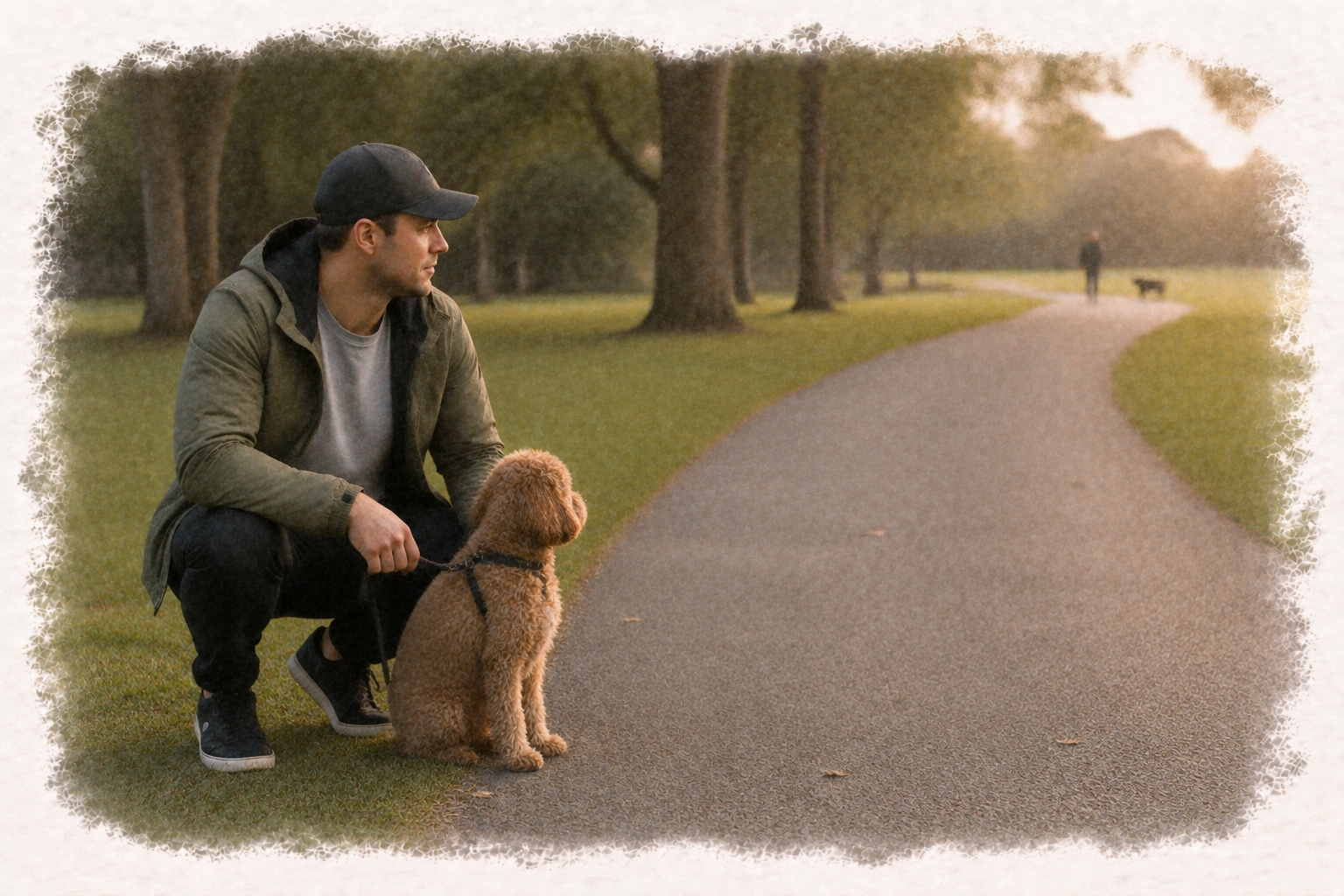
You’re doing the thing. You’ve watched the videos. You’ve read the posts. You’ve downloaded the guide. And yet there you are, on the footpath at Collaroy, your dog losing its mind at a Labrador on the other side of the street. Same as last Tuesday. Same as the Tuesday before that.
You’re not failing. You’re probably just solving the wrong problem.
The reason behind the reaction matters
Reactivity isn’t one thing. It’s a label we put on a whole range of very different emotional states. A dog reacting from fear needs a completely different approach to a dog reacting from frustration.
A dog trying to get closer to another dog needs a different plan to a dog trying to create space.
If you’ve matched the wrong training plan to the wrong emotional driver, you might actually be making things worse. Not because you’re doing it badly. Because the plan doesn’t fit the dog.
This is the first thing I look at with every reactive dog I work with. Not what the dog is doing. Why the dog is doing it. Everything else comes after that.
The dramatic moment is not where the work gets done
Everyone fixates on the explosion. The lunge, the bark, the spinning on the lead. That moment feels like the whole problem. It’s not.
That moment is just the end result of everything that came before it. Your dog’s nervous system was already winding up before you left the house. The walk itself didn’t cause it. It just gave the tension somewhere to go.
The real work happens earlier. What is your dog’s arousal level before the lead even goes on? What does the communication between you look like before you’ve left the gate? How are you setting the walk up so your dog isn’t already running hot when you hit the footpath?
When the preparation is right, the dramatic moments become less frequent. Not because your dog
has suddenly ‘learned’ not to react. Because you’ve stopped setting them up to fail.
Good training looks boring
There’s a version of reactive dog training you’ve probably seen. The dog is losing it. The trainer steps in. Big moment. Big correction. The dog settles. Dramatic.
That’s not training. That’s reacting to a reaction. It makes good television. It makes bad outcomes.
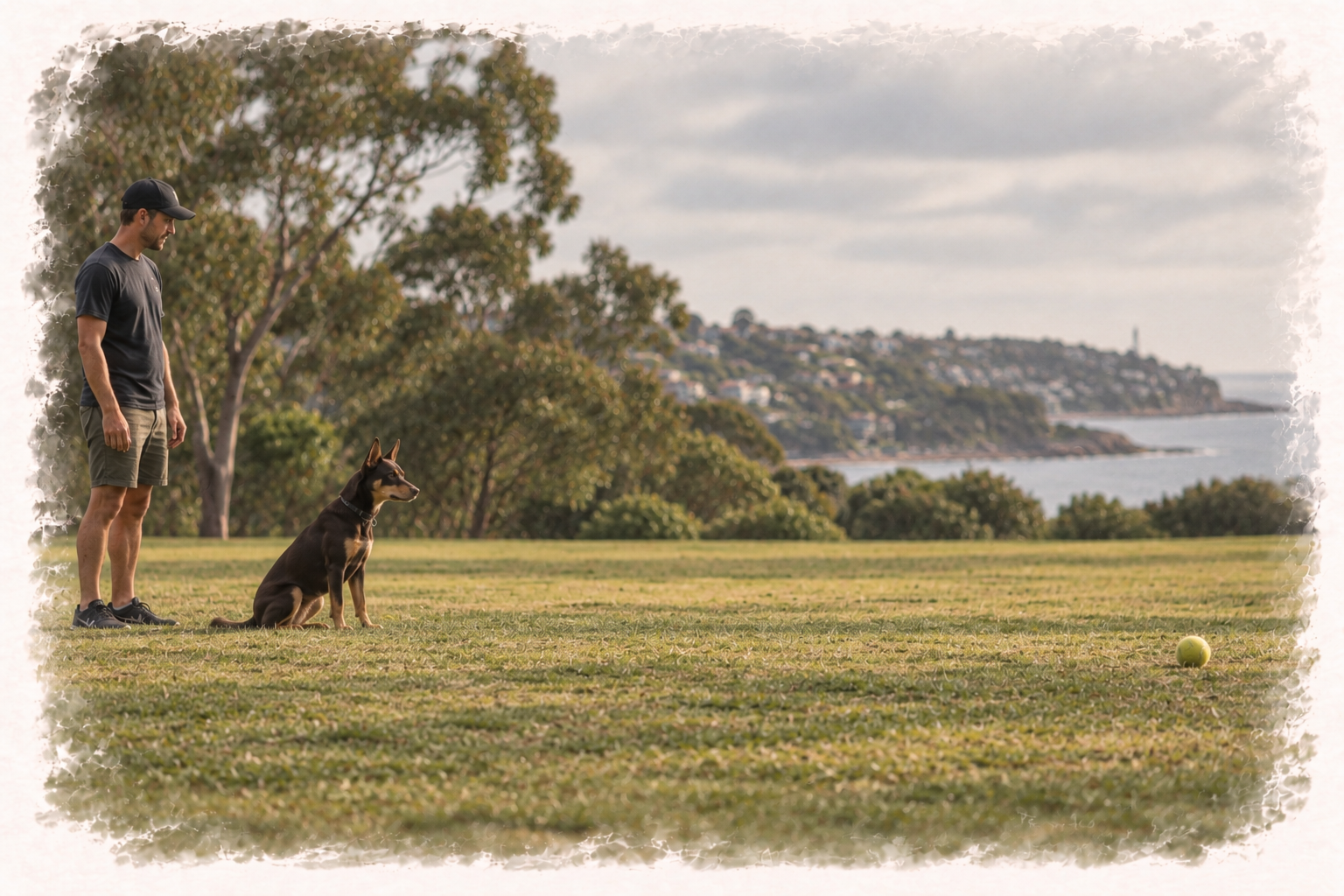
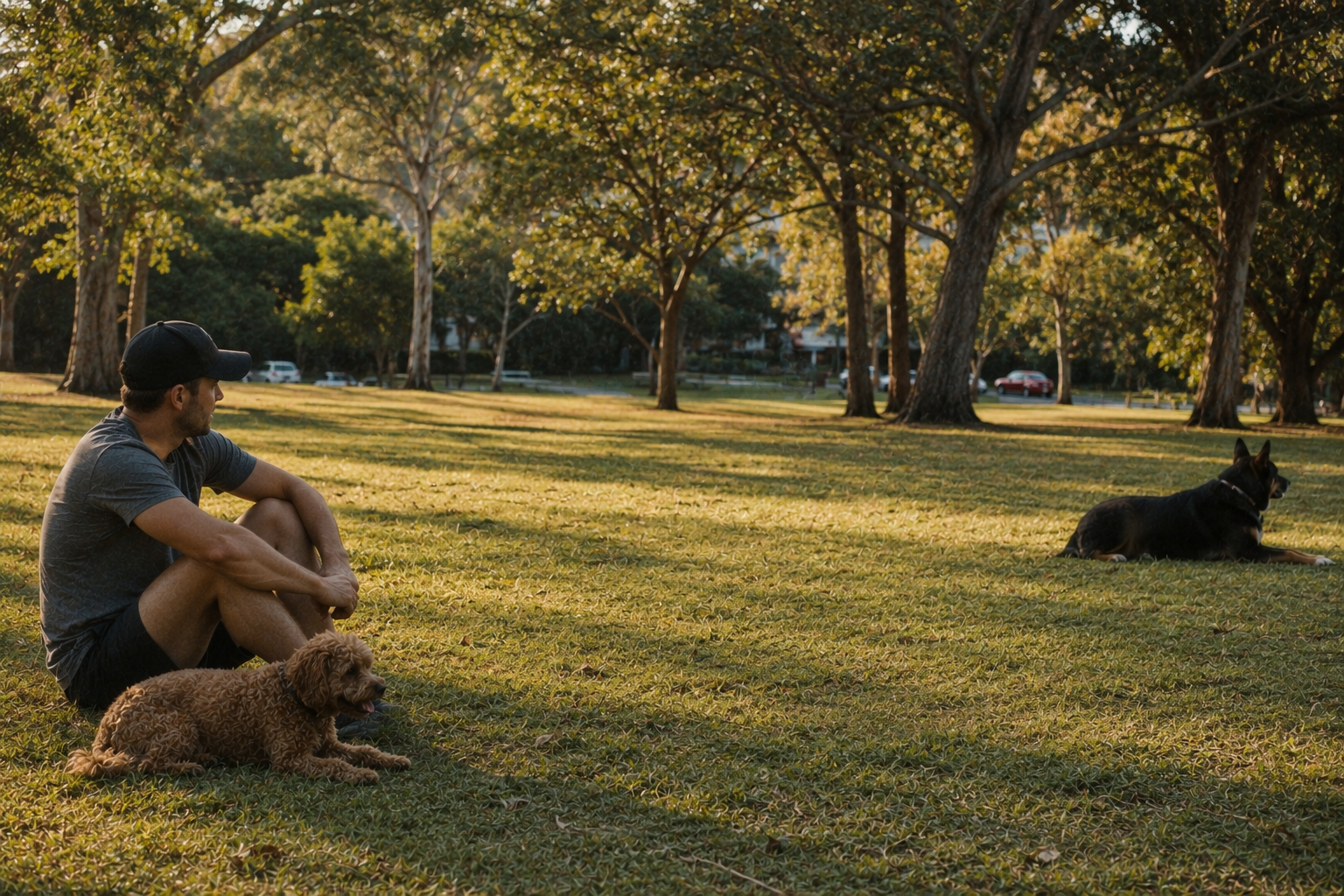
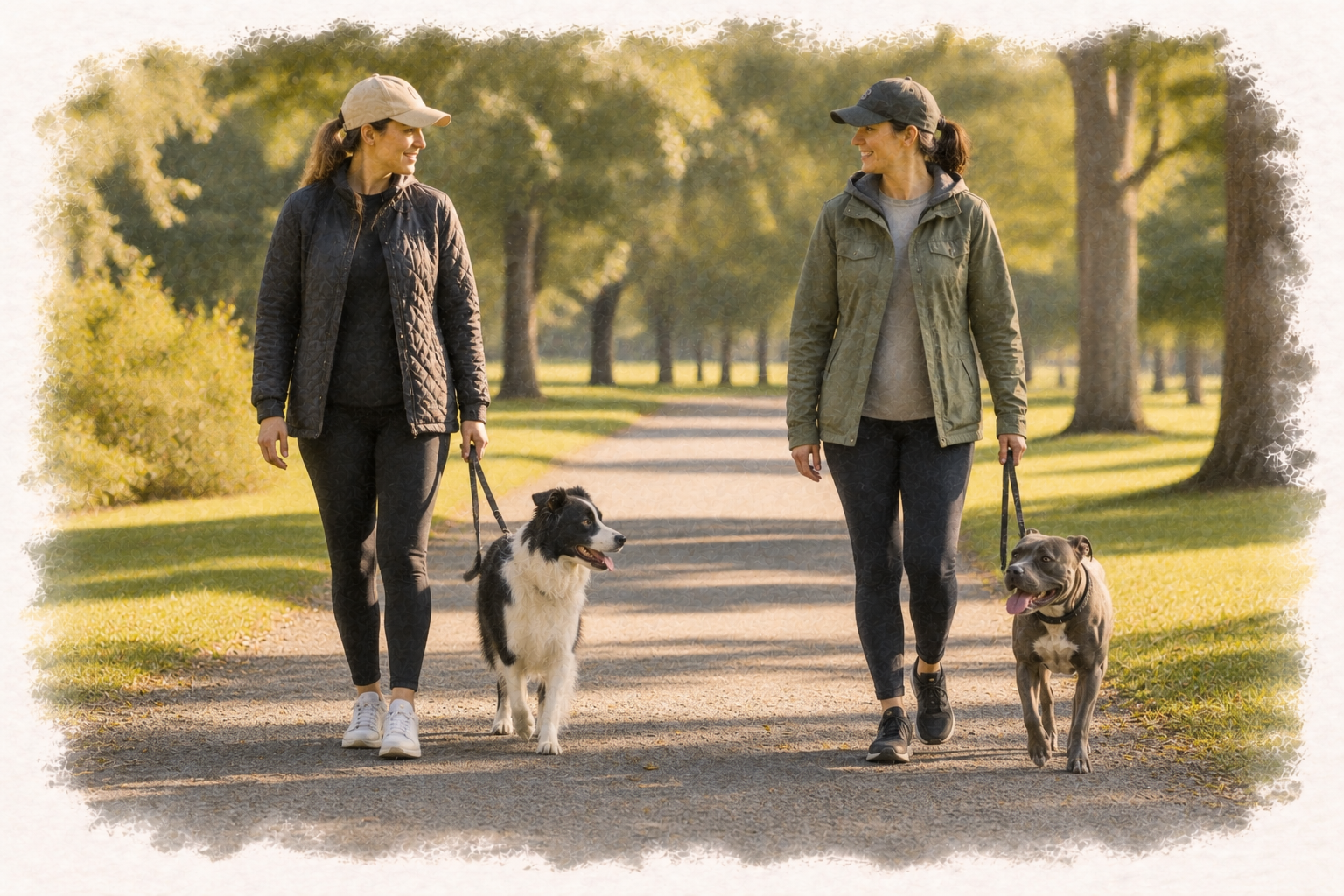
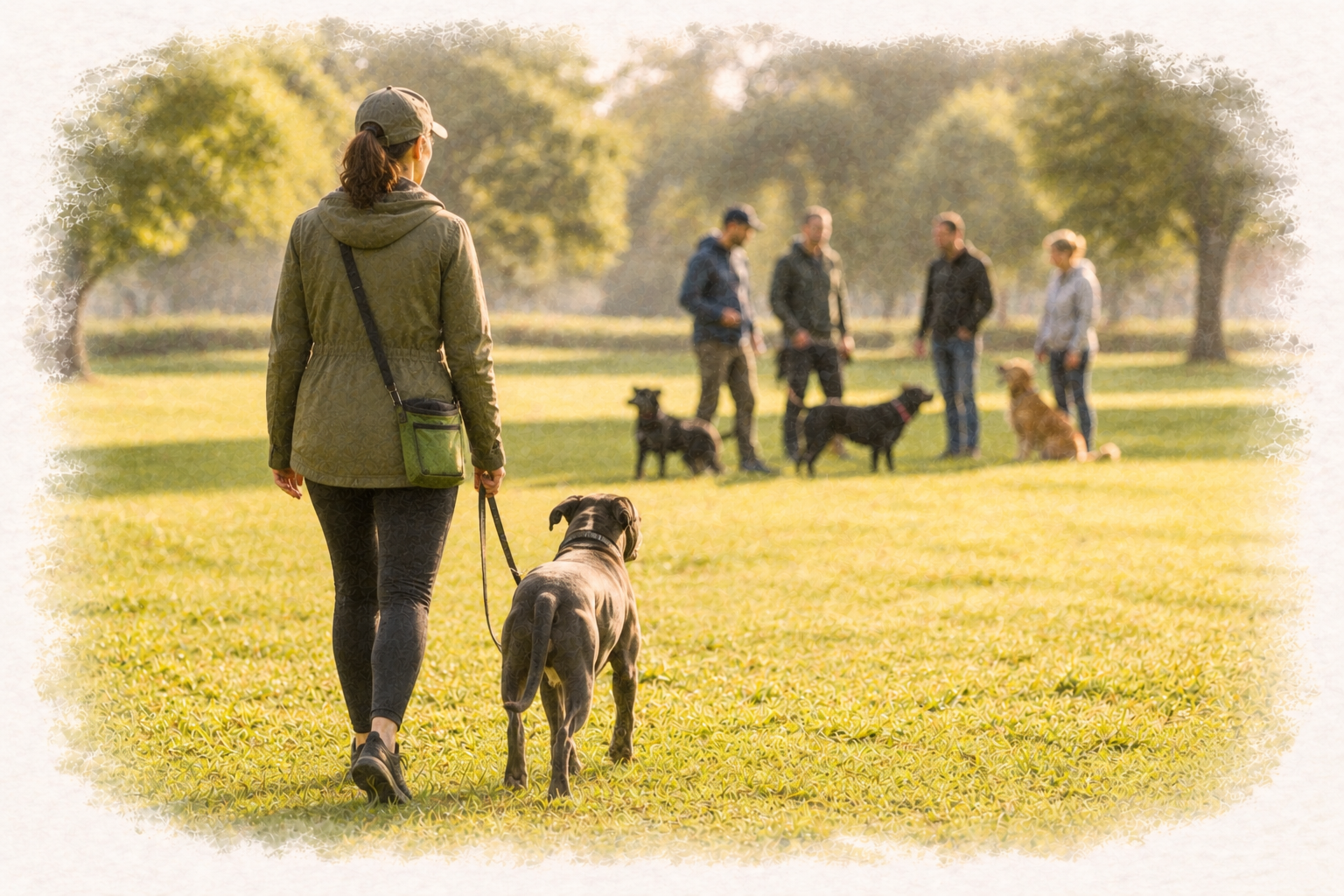
What real reactive dog training looks like is much less exciting. A dog on a footpath, noticing another dog, and doing nothing. A dog at a distance, taking a breath, looking back at their owner. A dog who walks past a trigger without the world ending.
We’re aiming for an absence of reactivity. That means we want the dog practicing calm. We set up situations where calm is achievable. We build from there. It doesn’t film well. It works.
Not all triggers are the same
Here’s something a lot of people don’t realise. Your dog probably doesn’t react the same way to every dog they see. Some they ignore. Some make them tense. Some send them over the edge.
A lot of it comes down to what the other dog is doing. A slow-moving, predictable dog drifting past in a straight line is a very different experience to a bouncy, erratic dog lunging at the end of its lead. The second one is harder for most reactive dogs to handle.
Speed matters. Predictability matters. Whether the other dog is staring or ignoring matters. Whether that dog is calm or amped up matters.
This is why blanket rules don’t hold up. “My dog needs three metres of space” doesn’t account for what’s filling those three metres. Your job on a walk isn’t just to manage distance. It’s to read the whole picture and adjust accordingly.
Where to start
If your current approach isn’t working, the answer usually isn’t to try harder at the same thing. It’s to step back and ask whether you’ve got the right read on why your dog is reacting in the first place.
Then look at what’s happening before the walk. Not during it. Before it.
And when you are out there, start paying attention to the other dogs. Not just their proximity. Their energy, their movement, their body language. That information changes what you do next.
Reactive dog training is slow work. But it’s not complicated work. Get the foundation right, and the footpath gets a lot quieter.