Your dog doesn’t want to play or say hello when they approach other dogs

Ian Shivers • February 28, 2025

Share this article

I understand why obedience is so attractive.

Understanding Your Dog’s Information-Seeking Behavior

Remember this! - When a dog encounters a new situation, when it’s meeting another dog, greeting a person, or facing something unfamiliar, their primary goal is not to play or say hello — it’s to get information. Understanding this natural behavior can help dog owners in Sydney better navigate social encounters and training situations.

The Need for Information

Dogs are naturally curious and cautious creatures. When they approach an unfamiliar situation, they’re seeking answers to a fundamental question… what does this mean for me?


  • Is this a threat?


  • Is this a friend?


  • How should I react?

Their decisions are based on the information they receive from the individual and their environment. How they interpret that information is affected by their current wellbeing, state of arousal and what their expectations were going into the situation.

The Importance of Your Dogs State of Arousal

The higher your dogs state of arousal, the lower their ability to process information.


If they can’t hear, read or respond appropriately to others because they’re over stimulated (whether that is because of excitement, fear, anxiety or whatever) then they are not in the right frame of mind for socialising.


Don’t just take the ‘easy route’ of letting your dogs run in and be overstimulated. This will ruin other dogs days and ultimately teach your dog habits that may actually force you to restrict their socialising more and more as time goes on.


Slow things down, take your time and practice gentle socialisation and your dog will have a happier time around others over the years.


The Importance of Reading Feedback

Dogs may have expectations about an encounter—perhaps they expect a playful interaction or a friendly greeting. However, they rely on immediate feedback to confirm or adjust their behaviour according to what they receive.


It’s a conversation between the dogs and ultimately our role in this is to ensure that our dogs are feeling safe and comfortable while not having a negative impact on anyone elses wellbeing. This is the bare minimum.


If another dog signals disinterest or discomfort, it’s up to the owner to guide their dog away respectfully. Teaching dogs to recognize and respond appropriately to social cues helps prevent negative interactions.


If the dogs are getting along or are making positive progress in their interactions, this is the time to consider staying longer of course.


Insecure Dogs and Guarded Behavior

When we see dogs approaching situations with tension or agitation, pressing too intensely or even aggressively for information, it often indicates insecurity. These dogs may:


  • Stand over other dogs.


  • Display tense body language.


  • Be perceived as dominant or pushy.


  • Often even overly playful dogs that aren’t reading the other dogs social cues are trying to relieve their own stress of being there.


These behaviours often stems from a lack of confidence and the need for positive experiences to build trust.


Creating Positive Experiences

Throwing an insecure or anxious dog into overwhelming social situations rarely leads to positive outcomes. Instead, dog owners should focus on gradual exposure and confidence-building.

Tips for Setting Your Dog Up for Success:


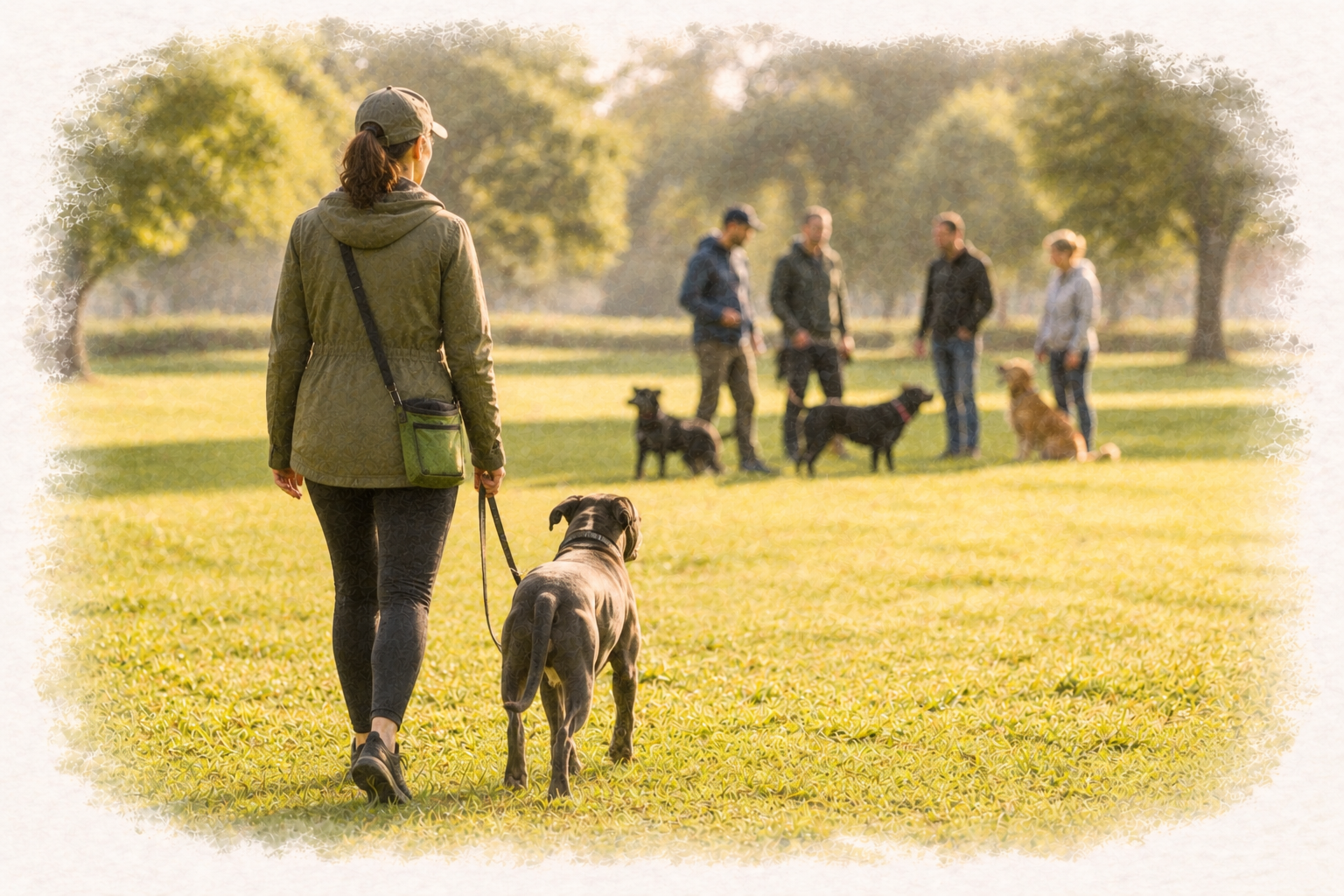
  1. Controlled Social Introductions: Introduce your dog to new environments and dogs in a controlled manner with an emphasis on your dogs arousal and coherence. If they’re over stimulated and cannot respon to your cues or the cues of others then reset and take the time to bring their arousal down before continuing.
  2. Positive Reinforcement: Reward calm and appropriate social behaviour. This doesn’t have to be treats or praise, sometimes simply allowing a positive social interaction to continue is plenty of reward.
  3. Reading Body Language: Pay attention to signs of stress or discomfort and intervene when necessary - We don’t want to micromanage but if we see our dogs are not recovering emotionally from negative experiences this is when we step in but if your dog has a negtivate experience and bounces back quickly then keep watching to see how it progresses.
  4. Respecting Boundaries: Ensure your dog respects the space of others and exits interactions gracefully when needed - Remember that socially appropriate is actually what being social is about. The dog that wants to say hello to everyone but isn’t picking up what the others are saying is actually being anti social.


Conclusion

Understanding that your dog’s primary goal is information gathering can change how you approach social situations. By setting them up for success, respecting their need for security, and fostering positive experiences, you can help your dog develop confidence and social skills.


If you’re looking for expert guidance on how to train your reactive dog or navigate social situations, consider professional dog training programs in Sydney that focus on compassionate and thoughtful training methods.


I understand why obedience is so attractive.

Recent Posts

By Bondi Behaviourist April 28, 2026
Most reactive dog advice skips the fundamentals. A Sydney dog behaviourist explains the two skills — leash handling and spatial awareness — that make the biggest difference on walks.
By Bondi Behaviourist April 21, 2026
If your dog barks, lunges or shuts down on walks, this is where to start. A Sydney dog behaviourist explains what's really driving reactivity — and the approach that creates lasting change.
Calm dogs
By Bondi Behaviourist April 9, 2026
Most owners reward excitement without realising it. A Sydney dog behaviourist explains why noticing and protecting calm — rather than interrupting it — is one of the most powerful things you can do for your dog.
Is Your Dog Rushing You at Home? Create Calm, Clear Daily Routines | Dog Training Sydney
By Bondi Behaviourist April 9, 2026
Most puppy training focuses on commands. A Sydney dog behaviourist explains why supporting your puppy's emotional state first makes everything else — the listening, the learning, the calm — fall into place.
By Bondi Behaviourist April 8, 2026
When dogs rush you through daily routines it's not naughtiness — it's a lack of clarity. A Sydney dog trainer explains how working dogs think, and how simple structure creates calm involvement at home.
By Bondi Behaviourist April 1, 2026
Letting your dog sleep on the bed isn't a dominance issue or a training failure. A Sydney dog behaviourist explains when it works, when it doesn't, and why the decision is simpler than you think.
By Bondi Behaviourist March 24, 2026
Trying to make every walk perfect puts pressure on you and your dog. A Sydney dog trainer explains why balance over time — not perfection every outing — creates calmer, more enjoyable walks.
dog training ace freework
By Bondi Behaviourist March 19, 2026
Aggression isn't bad behaviour — it's communication. A Sydney dog behaviourist explains what unmet need is driving your dog's reactivity, and why addressing that changes everything.
By Bondi Behaviourist March 12, 2026
Exhausting your dog isn't the goal — a dog that collapses from overstimulation isn't the same as one that's genuinely calm. A Sydney dog behaviourist explains why, and what to aim for instead.
By Ian Shivers February 24, 2026
I understand why obedience is so attractive.
Show More