Why You Should Greet Your Dog When You Get Home

Ian Shivers • November 11, 2025

Share this article

I understand why obedience is so attractive.

There’s a piece of advice that floats around in dog training circles that sounds good in theory but falls apart in practice:
“Ignore your dog when you come home until they’ve calmed down.”

It’s advice that’s been repeated so many times it’s almost taken as truth. But when we stop and think about it — emotionally, behaviourally, and relationally — it doesn’t hold up.

Because when you walk through the front door, your dog isn’t just being excitable for the sake of it. They’re seeking information, reassurance, and safety. And ignoring them does the exact opposite of what they need.

Dogs Don’t Just Want Attention — They Want Information

Calm Acknowledgement Builds Predictability

When you calmly greet your dog, you’re not “rewarding bad behaviour.” You’re meeting an emotional need.


By offering calm acknowledgment — a gentle hello, eye contact, a hand on the chest, or even a quiet word — you’re saying, “You’re safe. I see you. Everything’s okay.


Over time, this consistent feedback builds predictability. Your dog learns what to expect every time you come home. And with predictability comes emotional safety — the foundation of calm, confident behaviour.


The key isn’t to ignore excitement. It’s to co-regulate it.


Yes, it might look messy at first — calming an emotional being always does. But with time, consistency, and predictability, their emotional response will settle because their need for reassurance is being met.


The Absurdity of Ignoring Those We Love

Imagine if, after daycare, I came home and my two-year-old daughter ran up to me with joy — calling out, laughing, arms wide — and I just stood there silently until she “settled down.”

It would be absurd. She’d be confused, hurt, and probably cry.

That kind of emotional dismissal wouldn’t calm her — it would make her anxious. It would teach her that her joy is unwelcome and that she can’t rely on me for comfort or safety.

Yet this is often what we’re told to do to our dogs.

Our dogs are emotional beings, not robots. They look to us for cues about safety, just like children do. When we respond predictably, calmly, and warmly, we help them regulate their emotions — not by ignoring them, but by guiding them.

Co-Regulation Is the Long Game

Co-regulation — the process of helping another being regulate their emotional state through calm, consistent presence — is one of the most powerful tools we have in behaviour change.

If we’re frustrated, chaotic, or inconsistent, our dogs will mirror that.

If we’re steady, calm, and predictable, they’ll start to reflect that back too.


This doesn’t mean letting your dog jump all over you unchecked — it means teaching through connection.


You can greet your dog warmly while maintaining boundaries: step back if needed, guide them to sit, use calm body language — but stay emotionally available.


Over time, they’ll learn that calm behaviour gets calm connection, and that security comes not from control, but from clarity.


The Takeaway

Ignoring your dog when you walk through the door doesn’t teach calm — it teaches confusion.

When anyone comes through the front door — whether it’s you, a guest, or the postie — your dog’s first instinct is to gather information: Who’s here? What’s happening? Are we safe? How do I respond?


Until they have those answers, they won’t feel secure.  So they do what dogs do best — they seek information.


That might look like jumping up, sniffing, barking, pacing, or following you around. None of this is “naughty” behaviour; it’s communication. It’s their way of saying: “Please tell me what’s going on.


When we ignore them, we don’t reduce their arousal — we extend their uncertainty. And uncertainty breeds anxiety.


You Can:


  • Sit with them


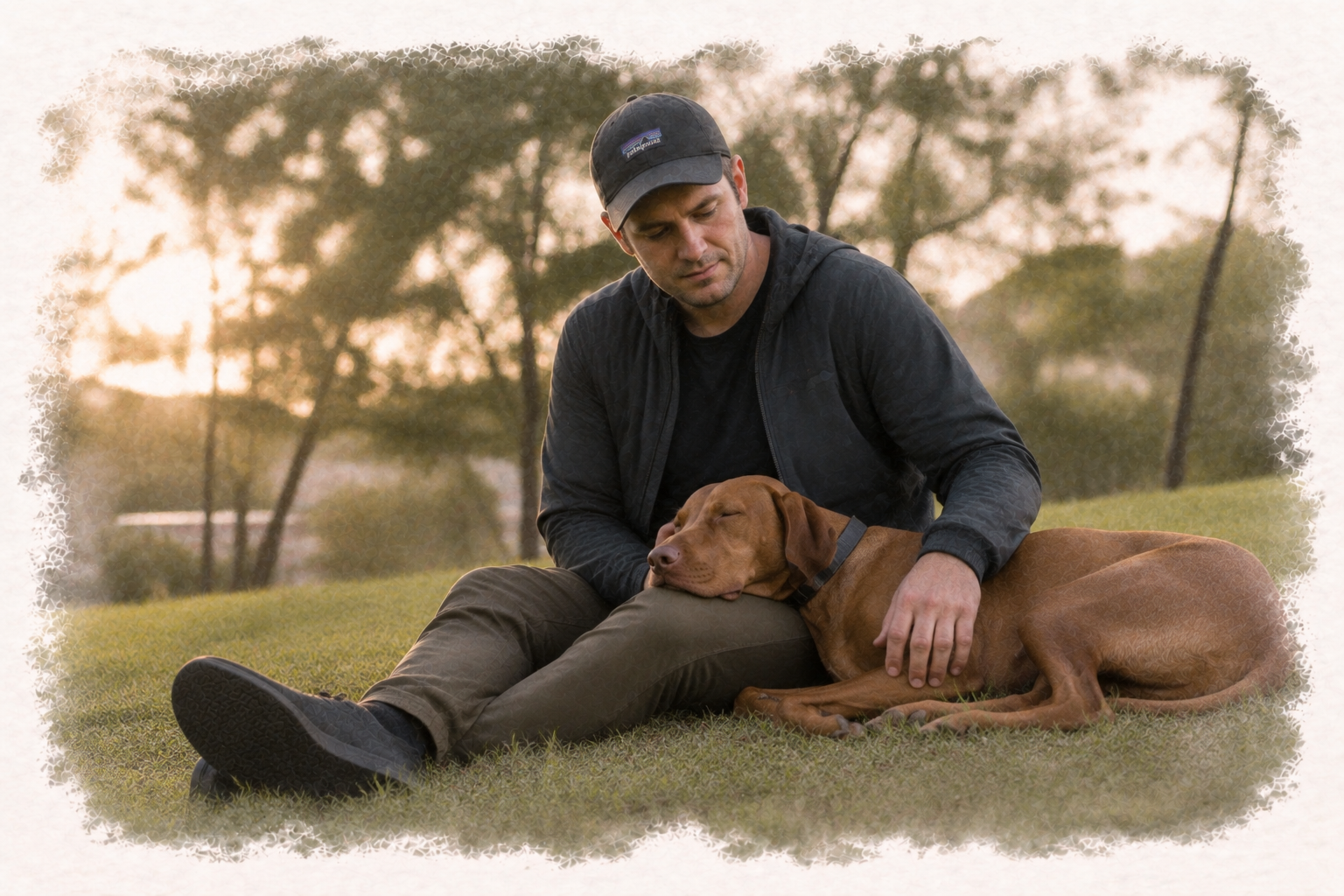
  • Give them pats & massage


  • Use calm tones in your voice and avoid high pitch ones


  • Give them something to chew


  • Help their nervous system relax


Greeting them calmly, predictably, and warmly builds trust, reduces anxiety, and lays the groundwork for emotional stability.


Because what your dog really wants when you get home isn’t attention — it’s information.


They want to know: Are you safe? Am I safe? Are we okay?


Your calm acknowledgment answers all of that at once.


And in the long run, that’s what changes behaviour — not silence, not correction, but connection.

👉 Want to learn how to build emotional safety and calm connection with your dog?


You can read this full blog — plus free guides, workshops, and courses — inside our
Free Dog Training Starter Guide, powered by Bondi Behaviourist and Canine Caregivers.

— Ian

 Bondi Behaviourist


“A healthy dog is a happy dog and a happy dog is great to live with”.

I understand why obedience is so attractive.

Recent Posts

dog training ace freework
By Bondi Behaviourist March 19, 2026
Aggression and reactivity in dogs aren't behaviour problems. They're expressions of unmet needs. Learn what your dog is really asking for and how to help.
By Bondi Behaviourist March 12, 2026
A lot of people think the goal with dogs is simple: “Just tire them out.” Play with them. Exercise them. Stimulate them. Keep them busy. The idea is innocent enough. “If my dog is tired, they’ll relax.” But there is a very important difference that often gets missed: A tired dog is not the same as a relaxed dog. And many dogs today are not relaxed at all. They are simply exhausted. Exhaustion Is Not Relaxation Many dogs live lives full of stimulation. Constant activity. Constant engagement. Constant entertainment. They’re always doing something. Then eventually they crash. People look at this and think: “Great. My dog is finally relaxing.” But collapsing from exhaustion is not the same as feeling comfortable enough to relax. A dog that truly feels safe and settled can: Drop their guard Rest during the day Switch off without needing to be exhausted first Be calm even when nothing is happening That’s a very different experience from a dog who only stops because they’ve hit their limit. A Story From My Own Life I often think about this when I look at my daughter. She loves swimming. She loves going to the park. She’s great with people, so she enjoys coming to the pub with me while I have a pint and she plays in the play area. She also loves playing with her toys at home. All of these things are great for her. But if I tried to do all of them in one day , it would not end well. By the end of the day there is a very high chance that getting her to sleep would be a challenge. The next day would probably be a challenge too, because she’d still be dysregulated from the day before. If I repeated that kind of day again and again, her behaviour would likely become unrecognisable from the happy, well-adjusted and social kid I know her to be. And if it went on long enough, some people might start describing that behaviour as her personality . Which would be completely unfair. Because it wouldn’t be who she is. It would simply be the result of too much stimulation and not enough recovery. The Same Thing Happens With Dogs Dogs are no different. If their lives are full of stimulation all the time, it becomes much harder for them to settle. Because settling is a skill. And like any skill, it has to be practiced. If a dog is constantly being stimulated, entertained or activated, they never actually practice switching off. So when we suddenly want them to relax, they simply don’t know how. Down time can feel uncomfortable when you’re used to being busy all the time. But that discomfort is often misunderstood. People assume the dog is just energetic . But there is a big difference between: • A dog that is energetic • A dog that is unable to settle Those are very different states of being. Stimulation Should Be Quality, Not Quantity Dogs absolutely need stimulation. They also need: Sleep Enrichment Exercise Interaction But the key is balance. Stimulation should be about quality, not quantity. Even things we love can become draining when there is too much of them. Too much stimulation — even if it’s fun — eventually becomes taxing rather than enriching. An Exhausted Dog Isn’t At Their Best A dog that is constantly pushed to exhaustion ends up just like an exhausted human. They become: Less tolerant Less resilient More reactive More easily frustrated More prone to stress behaviours They become narky. Anti-social. Short tempered. That’s not enrichment. That’s fatigue. My Baseline Is Calm Instead of trying to keep my dogs busy all day, I invert the approach many people take. My baseline is calm. Throughout most of the day, my dogs are: • Resting • Relaxed • Calmly present in the environment Even if they are around while I’m doing something, the expectation is that they are settled . If a situation is too stimulating for them to relax and it isn’t about them, then I simply don’t involve them. They stay home. They rest. They recover. Because rest is not laziness. Rest is regulation. Then We Bring The Enrichment At times that suit my day, my preferences and their needs, we bring stimulation to the table. That might be: Enrichment Exercise Play Training Exploration Social interaction The goal is not just to burn energy. The goal is to satisfy something meaningful . Their minds. Their instincts. Their bodies. Their curiosity. Then, when the activity is finished, we return to our calm baseline. The Goal Was Never a Tired Dog Many people aim for a tired dog. I never do. I aim for a dog that is: • Satisfied • Fulfilled • Comfortable in their own skin A tired dog is exhausted. A satisfied dog is regulated. And those two things create very different lives. If you’d like help applying this and in doing so, improving your and your your dogs lives, I can support you in a few different ways. Through Canine Caregivers , I offer online courses and webinars to build understanding, structure, and consistency at your pace. If you’re based in Sydney, I also offer 1:1 training across Sydney , socialisation and puppy classes , and can provide all recommended training equipment to support the work we’re doing. I offer The Complete Care training program that covers every single base you will need as well as The Starter Program which allows you to tailor the training and support you need with flexibility. 👉 Join Canine Caregivers 📞 Or get in touch for 1:1 help in Sydney
By Ian Shivers February 24, 2026
I understand why obedience is so attractive.
By Ian Shivers February 17, 2026
I understand why obedience is so attractive.
By Ian Shivers February 10, 2026
I understand why obedience is so attractive.
By Ian Shivers January 31, 2026
I understand why obedience is so attractive.
By Ian Shivers January 27, 2026
I understand why obedience is so attractive.
By Ian Shivers January 21, 2026
I understand why obedience is so attractive.
By Ian Shivers January 14, 2026
I understand why obedience is so attractive.
By Ian Shivers January 6, 2026
I understand why obedience is so attractive.
Show More