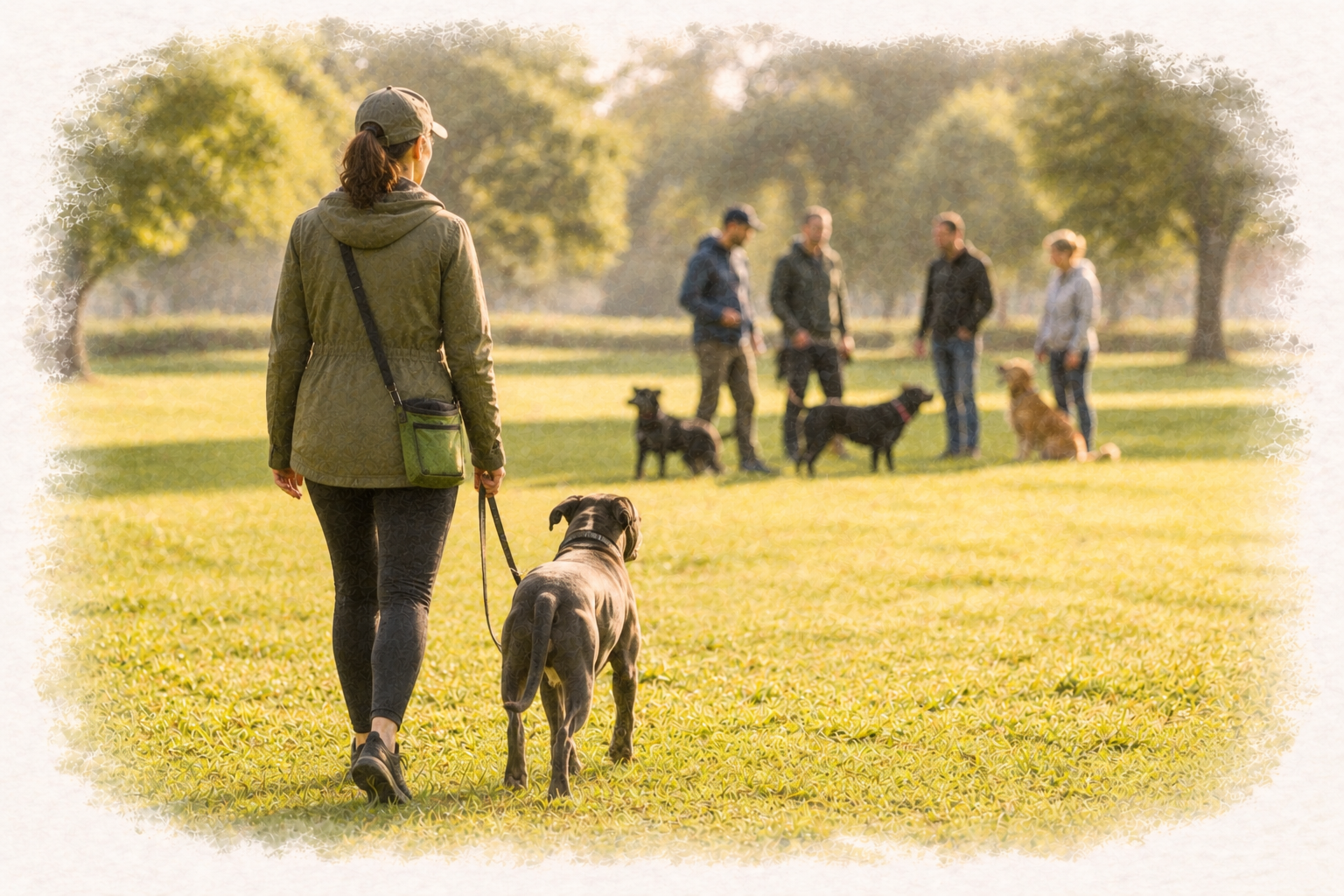
Dog Parks - What You Need to Know

Ian Shivers • September 6, 2022

Share this article

I understand why obedience is so attractive.

Dog park etiquette is often a tricky area to navigate because everyone has differring perceptions of what is acceptable.

To help you create positive experiences at the dog park here are some of the guidelines that we stand by:

If you do not have good recall over your dog when it is off leash, then think twice before letting it off. Is the situation appropriate? Are there kids running around? Are there sunbathers or people picnicing for your dog to jump all over? If its not appropriate then don't do it. If you let your leash off knowing it won't come back, you are setting yourself and your dog up to fail. Instead, work on your dog’s recall - take treats with you and reward your dog regularly for returning to you. Build up your communication skills gradually with your dog and avoid asking them to run before they can walk.

Keep your dog calm in the dog park. This does not mean your dog cannot play and have fun. However, an overstimulated dog is an incoherent dog that is unable to process information properly. If your dog cannot hear you when you call it back, it probably can't hear other dogs when they are trying to communicate. A dog park should be a social place where we are respectful of others personal space. This requires a certain level of manners and awareness that overstimulated dogs do not have.

"He is friendly" or "He just wants to play" are not excuses to let your dog run up to other and get in their personal space uninvited. We don't want other people doing this to us, and we would all react with a degree of discomfort if it did happen to us, so why do we think our dogs should tolerate it?


A social dog is not a dog that wants to play with everyone and everything. A social dog is a dog that can read a situation and react appropriately. Dog play is not all there is to socialising. Dogs that play well is as a result of a friendship or a trust between individuals that have built a relationship through communication. It is a conversation between those involved - a series of invites and gestures for space - it goes wrong when one dog stops listening to the other. If a dog no longer wants to play it is not being anti-social, it is in a position where it no longer feels comfortable, and it is the job of the other dog read this. The anti-social dog is the one that fails to read these signals.


"Socialisation is building a tolerance of others in your personal space"

No dog on earth has ever gone out for a walk for physical exercise. Dogs do not try to keep fit or keep a trim figure. Naturally dogs travel either alone, with familiar friends or family members. They explore and forage for food, taking in information left by others. They leave behind their own scents and information for the next passers by. In their world, everyone new is a potential threat until they know otherwise. New dogs can be treated as such so do not expect your dog to like all dogs they meet- do you like everyone you meet?


Allow your dog to explore, travel and forage. If your dog comes across a friend and they both want to play then great, but allow for change as well, does one want the game to stop? Or maybe someone else has joined in that is not welcome... thats ok, just be aware and adapt where necessary if you need to make your dog feel better again.


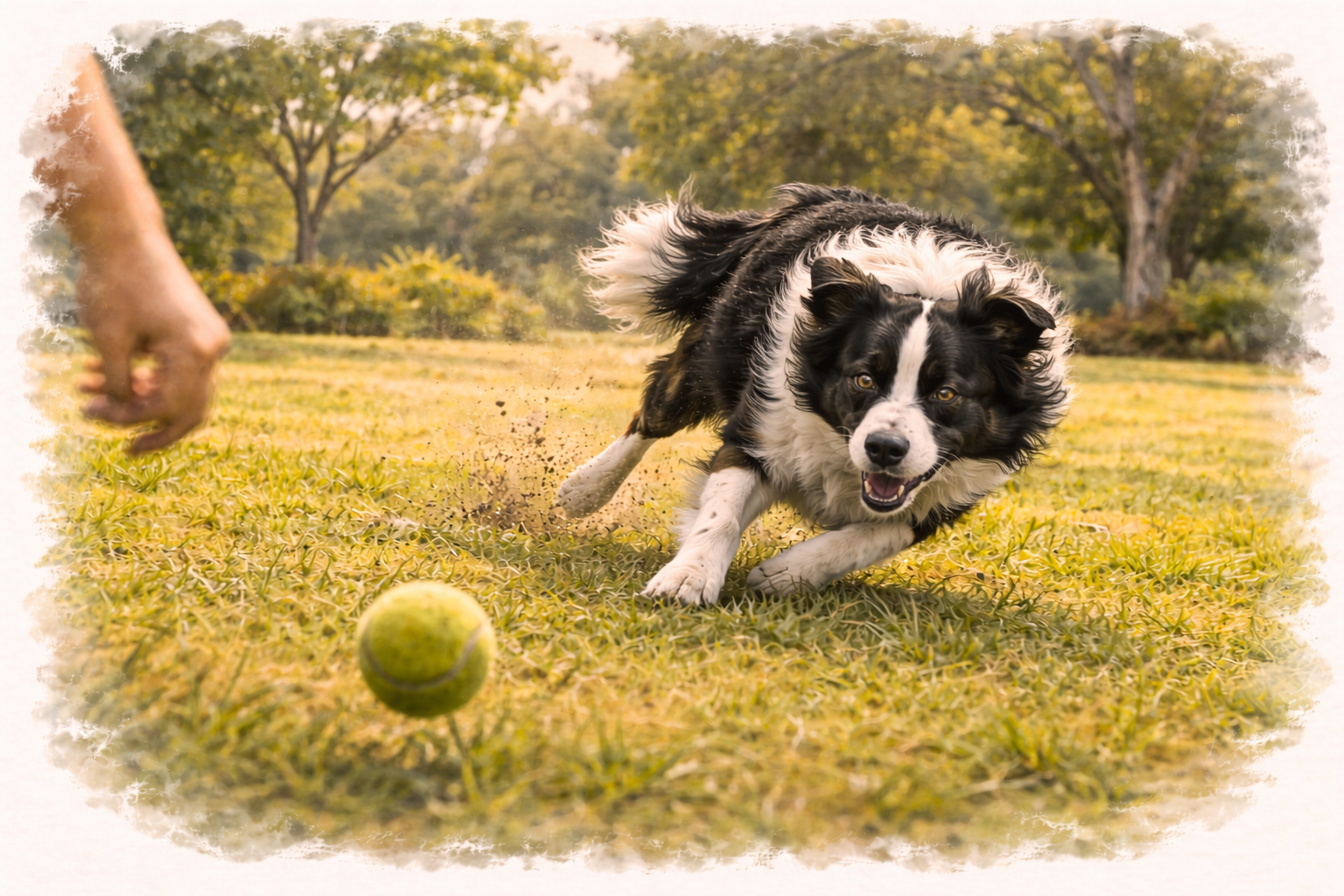
Avoid taking toys and balls to the dog park. They are valued resources that your dog or other dogs could potentially guard. Its a quick way to cause conflict and ruin everyones day. The dog that chooses to chase the ball relentlessly is likely to be chasing it out of compulsion, not play, it doesn't want that ball - it NEEDS it. If we look at how it is really behaving - It is choosing not to interact with the other dogs and people. Does it really want to be surrounded by people and dogs? If your dog doesn't play well with other dogs when there is no ball present, then it tells us very clearly that they do not enjoy the situation it is in, and that it is uncomfortable interacting with other dogs in this environment.


Is your dog the dog that runs up and staunches every dog it sees?  It is nervous - it is unable to drop its guard around new dogs and is checking each individual to see if it is a threat - IT IS NOT TRYING TO DOMINATE THEM!! If this is your dog, please stop putting it in this situation. Too often dog owners use the term "just let them be dogs" when there is conflict. Physical conflict for a dog is a last resort. It is the result of a dog that has panicked due to the situation we have put it in... not because it wants to fight. They don't know we can take them to a vet or repair their wounds. If a child was repeatedly getting into a conflict because of the situation we put them in, we would stop it and look after them - we should be treating our dogs the same way.


Dog parks are a completely man made idea. No dog has ever thought, I wish I could go to a dog park!! Because they have no concept of what one is. It is a gathering of strangers who are forcing them to interact. Your dog didn't choose to be there - you chose for them to be there.


Do not reprimand your dog for an unwanted behaviour at the dog park. Take responsibility for your actions and the situation you put your dog in. Using the excuse "well everyone else does it this way" is lazy and no way to look after a family member. Try to educate yourself and understand why it is happening, you can then look after their needs instead. If you do take your dog to a dog park then be vigilant and take responsibilty of your dog’s behaviour. Keep the communication channels open, keep it positive and recognise whether your dog actually wants to be there or not.


Dogs that do not like the company of other dogs will not learn to like them more by being thrown in at the deep end. They are not comfortable with other dogs in their personal space so do not compromise them. On the other hand, removing other dogs from their environment for a couple of weeks could considerably reduce their stress levels. This in turn, may result in them being more tolerant of new things, once the cortisol levels have been reduced. If we put our dogs on a stress break more often and built tolerance gradually - by creating positive experiences and keeping a distance that does not cause stress - we can then start to see them grow in confidence and increase their curiosity of other dogs - increasing their tolerance.


Dogs are not able to make the choices of where they go and how they're treated but I know how I would prefer to be treated if the options were taken out of my hands.


If you’re struggling to know how much exercise is too much or if you’ve got a dog that simply won’t tire out despite how much you exercise them then you can always ask us! You can find us on Facebook - ‘Bondi Behaviourist’ or if you’re struggling a little more than that then take a look into our services and get in touch by booking a free Discovery Session. We’re happy to help.

I understand why obedience is so attractive.

Recent Posts

dog training ace freework
By Bondi Behaviourist March 19, 2026
Aggression and reactivity in dogs aren't behaviour problems. They're expressions of unmet needs. Learn what your dog is really asking for and how to help.
By Bondi Behaviourist March 12, 2026
A lot of people think the goal with dogs is simple: “Just tire them out.” Play with them. Exercise them. Stimulate them. Keep them busy. The idea is innocent enough. “If my dog is tired, they’ll relax.” But there is a very important difference that often gets missed: A tired dog is not the same as a relaxed dog. And many dogs today are not relaxed at all. They are simply exhausted. Exhaustion Is Not Relaxation Many dogs live lives full of stimulation. Constant activity. Constant engagement. Constant entertainment. They’re always doing something. Then eventually they crash. People look at this and think: “Great. My dog is finally relaxing.” But collapsing from exhaustion is not the same as feeling comfortable enough to relax. A dog that truly feels safe and settled can: Drop their guard Rest during the day Switch off without needing to be exhausted first Be calm even when nothing is happening That’s a very different experience from a dog who only stops because they’ve hit their limit. A Story From My Own Life I often think about this when I look at my daughter. She loves swimming. She loves going to the park. She’s great with people, so she enjoys coming to the pub with me while I have a pint and she plays in the play area. She also loves playing with her toys at home. All of these things are great for her. But if I tried to do all of them in one day , it would not end well. By the end of the day there is a very high chance that getting her to sleep would be a challenge. The next day would probably be a challenge too, because she’d still be dysregulated from the day before. If I repeated that kind of day again and again, her behaviour would likely become unrecognisable from the happy, well-adjusted and social kid I know her to be. And if it went on long enough, some people might start describing that behaviour as her personality . Which would be completely unfair. Because it wouldn’t be who she is. It would simply be the result of too much stimulation and not enough recovery. The Same Thing Happens With Dogs Dogs are no different. If their lives are full of stimulation all the time, it becomes much harder for them to settle. Because settling is a skill. And like any skill, it has to be practiced. If a dog is constantly being stimulated, entertained or activated, they never actually practice switching off. So when we suddenly want them to relax, they simply don’t know how. Down time can feel uncomfortable when you’re used to being busy all the time. But that discomfort is often misunderstood. People assume the dog is just energetic . But there is a big difference between: • A dog that is energetic • A dog that is unable to settle Those are very different states of being. Stimulation Should Be Quality, Not Quantity Dogs absolutely need stimulation. They also need: Sleep Enrichment Exercise Interaction But the key is balance. Stimulation should be about quality, not quantity. Even things we love can become draining when there is too much of them. Too much stimulation — even if it’s fun — eventually becomes taxing rather than enriching. An Exhausted Dog Isn’t At Their Best A dog that is constantly pushed to exhaustion ends up just like an exhausted human. They become: Less tolerant Less resilient More reactive More easily frustrated More prone to stress behaviours They become narky. Anti-social. Short tempered. That’s not enrichment. That’s fatigue. My Baseline Is Calm Instead of trying to keep my dogs busy all day, I invert the approach many people take. My baseline is calm. Throughout most of the day, my dogs are: • Resting • Relaxed • Calmly present in the environment Even if they are around while I’m doing something, the expectation is that they are settled . If a situation is too stimulating for them to relax and it isn’t about them, then I simply don’t involve them. They stay home. They rest. They recover. Because rest is not laziness. Rest is regulation. Then We Bring The Enrichment At times that suit my day, my preferences and their needs, we bring stimulation to the table. That might be: Enrichment Exercise Play Training Exploration Social interaction The goal is not just to burn energy. The goal is to satisfy something meaningful . Their minds. Their instincts. Their bodies. Their curiosity. Then, when the activity is finished, we return to our calm baseline. The Goal Was Never a Tired Dog Many people aim for a tired dog. I never do. I aim for a dog that is: • Satisfied • Fulfilled • Comfortable in their own skin A tired dog is exhausted. A satisfied dog is regulated. And those two things create very different lives. If you’d like help applying this and in doing so, improving your and your your dogs lives, I can support you in a few different ways. Through Canine Caregivers , I offer online courses and webinars to build understanding, structure, and consistency at your pace. If you’re based in Sydney, I also offer 1:1 training across Sydney , socialisation and puppy classes , and can provide all recommended training equipment to support the work we’re doing. I offer The Complete Care training program that covers every single base you will need as well as The Starter Program which allows you to tailor the training and support you need with flexibility. 👉 Join Canine Caregivers 📞 Or get in touch for 1:1 help in Sydney
By Ian Shivers February 24, 2026
I understand why obedience is so attractive.
By Ian Shivers February 17, 2026
I understand why obedience is so attractive.
By Ian Shivers February 10, 2026
I understand why obedience is so attractive.
By Ian Shivers January 31, 2026
I understand why obedience is so attractive.
By Ian Shivers January 27, 2026
I understand why obedience is so attractive.
By Ian Shivers January 21, 2026
I understand why obedience is so attractive.
By Ian Shivers January 14, 2026
I understand why obedience is so attractive.
By Ian Shivers January 6, 2026
I understand why obedience is so attractive.
Show More