
How to Change Your Dog’s Life by Understanding Enrichment

Ian Shivers • May 1, 2022

Share this article

I understand why obedience is so attractive.

Is your dog stressed, anxious, hyperactive and displaying behaviours that not only have you pulling your hair out, but have you concerned about their mental health?

Understanding how something as simple as the toys, chews, enrichment items and activities we provide our dogs can be one of the simplest and most effective ways to reduce undesirable behaviours and help the dog feel a sense of security.

This 5 minute read will help your dog learn how to self regulate their emotions, learn to feel safe in the home, and reduce stress all while giving you the information you need to set them up for success and make simple adaptations where needed.

So, what exactly is Canine Enrichment?

It’s this fancy word dog trainers use and something that a lot of people associate with the toys and chews they give to their dogs. But really, it’s so much more than that.

On a fundamental level, enrichment is what is required to meet our dogs needs so that they can be physically, behaviourally and emotionally happy. Without enrichment, an individual’s fundamental needs are not being met and their behaviour will be reflective of this. Deep right?

There are different aspects of enrichment - chews, toys and exercise are the ones that are commonly known in the world of pet dog owners. We want to highlight the below to consider how many ways that our dogs' lives can, and must be enriched for them to live a healthy life.


  • The perception of feeling safe 


  • Calm and Relaxation


  • Health & Veterinary


  • Diet, Nutrition & General Hygiene


  • Physical Exercise 


  • Sensory Stimulation 


  • Social Interaction, Exploration & Foraging


  • Mental Exercise & Independence 


If we do not take these considerations into account, or take them for granted then the behaviour in our dog’s will show this. Too often, when our dogs display undesirable behaviours we are quick to label them naughty, stubborn, spiteful, disobedient or even simply energetic. Instead, we must remember that their behaviour is information for us, and before we start labelling their behaviour we should take a look at why the behaviour is happening from the dog’s perspective. Taking a look at whether or not the fundamentals enrichment needs of their very being have been fulfilled is a great place to start.

What types of enrichment are we focusing on and Why?

Outlets that we can provide our dogs to keep them busy, help them relax, to play with and that we can interact with them with.


  • Toys


  • Chews


  • Puzzles


  • Activities


Because it is important that our dogs get the opportunity to express natural behaviours as means of entertainment and decompression.


For many dogs, this information on how we structure and use these items and activities simply does matter. I’ve got two dogs in my household and one of them, simply doesn’t need this information or input. But the other one definitely does. 


Having him in my life along with the thousands of clients I have worked with as a behaviour consultant, has allowed me to live this first hand, tweak things and develop my understanding. I am now at a point that I am confident that if you implement these simple changes you and your dog's life will significantly improve.


Myth Buster - Your dog will not learn to chew what you don’t want them to chew if you provide chewing outlets for them!!


Pacifiers and Amplifiers


The enrichment we leave our dogs is meant to keep them occupied. But what frame of mind do the items we leave out take them? Do they amplify their arousal or do they pacify their arousal?


Amplifiers

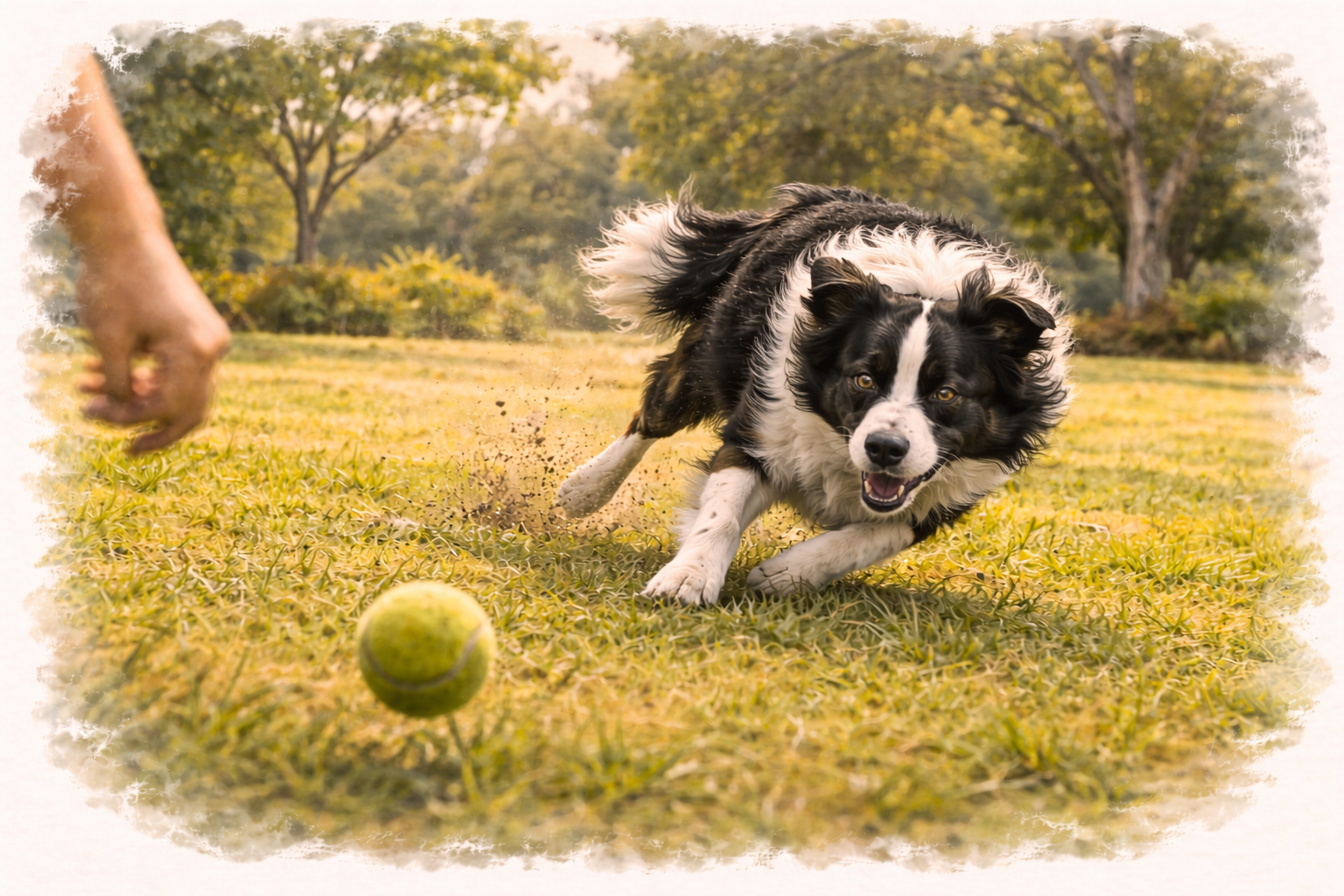
Squeaky toys, things the dog destroys intensely, thrashes around, the toys that roll, and toys they bring to you rather than interact independently with. These items often leave our dogs in the same heightened state that they were in when they started or even spike the dog’s arousal levels higher. These are your amplifiers.

This may distract the dog for a few moments while providing that great big kick of dopamine and adrenaline, but ultimately they leave the dog in a ‘what’s next’ frame of mind. 


So often this sense of excitement is followed by a sense of emptiness, resulting in the dog feeling the need for the next ‘fix’ in only a short matter of time.


Pacifiers:


Things that the dog chews, holds in its mouth (provided they don’t drop the object at you to engage with them and that you don’t try to throw it or take it from them), lays with or on, shreds and some dogs do a scraping nesting action, needing action with their paws or even suckle on. These are your pacifiers.


Providing something soft for the dog to lay with can provide a constant comforter, a soft toy that does not make a noise and the dog is not obsessed with pulling the stuffing out of can provide a calming effect by being carried around or lay with for the dog. 


These behaviours help the dog produce serotonin, while providing the dog with an activity. They help the dog self soothe, reduce their state of arousal while self regulating their emotions. Ultimately, leaving them in a state that is more relaxed than when they started.


Leaving out an appropriate chew give the dog a great option that helps them self-soothe and keeps your furniture free of teeth marks. There are some key factors to consider when it comes to what exactly to leave them to chew:


How To Use Them Effectively

Have two toy boxes - One for Pacifiers - One for Amplifiers


  • Keep both out of reach of the dog so that the dog cannot access them as and when they please


  • Have at least 8-10 different pacifiers in your possession


  • Ensure that the dog has unlimited access to 4-5 pacifiers at all times


  • Rotate the pacifiers to keep them novel (some dogs you’ll have to rotate a couple of times a day, others every day or two)
  • Because the amplifiers are not readily available but are important to our dogs enrichment needs, bring them out at appropriate times during the day. (Some dogs, once or twice is enough whereas others will need to be given activities 4-6 times a day)


  • Always put the amplifiers away at the end of the session, do not leave them available outside of this context.


Why is it important to separate them?


Think of it like leaving your phone next to your book. You pick up your phone hundreds of times per day and most of us are still promising ourselves that we will get into reading as part of our New Year's resolutions for 2020. Amplifiers are highly addictive whereas pacifiers are harder work.


But the knock on effects are HUGE.


A dog that remains in a heightened state of arousal and does not practice self soothing and decompressing is going to be a cocktail of adrenaline, cortisol, unpredictable behaviour, mood swings and behavioural issues. Just like we would be if we were living the same lifestyle.


Think about it this way…


We get a visitor and our dogs go over to greet the guests, they get excited and say hello and everyone’s telling you how much Rover has grown. He runs over to the other side of the room and he picks something up in his mouth… What does he pick up? If he picks up a chew and takes himself off to his bed… The rest of the conversation is about how great Rover is and how nice it has been to catch up with old friends


Or…


Rover picks up his rope toy and brings it over to your guest. Your guest says ‘what have you got for me’ and plays tug of war for a good 30 seconds. The games stop and you and your guests go to sit down to have a beer… Rover’s not finished, he’s found a ball and drops it at your feet.. You don’t throw it… he barks… this goes on… and on… until you shut Rover in the other room… he barks some more. You spend all night apologising for Rover, feeling guilty that he’s in the other room and at the end of the night your guest says, “that was great, maybe next time you come over to my place!?” You say “yeah that’d be great” but really, you can’t help but feel that little bit embarrassed.


You see, self soothing is a skill that has to be practised. I believe that a lot of people innocently yet naively believe that a dog will settle when it’s tired. But our world is full of stimulants, full of very human things that our dogs simply cannot comprehend that keep their nervous systems on far longer than they ever should have been. It’s an ever growing issue with our own ability to stop and relax when we should in this human world, and it is true for our dogs also.


Not to mention our culture of ‘exercise discipline affection’ and ‘a tired dog is a happy dog’ - what a load of rubbish. A tired dog is the same as a tired human.. Irritable, cranky, low social thresholds and not great at coping with change. It’s a terrible goal that we all need to move away from.


But My Dog Won’t Chew Anything


Did you think I didn’t see this coming? The dogs that won't chew, walk around with their chews whining or hide them for the middle of the night. I’ve been doing this for fourteen years and have seen it all.


Your dog not chewing is a symptom of the problem. Not the problem.


 - In order to chew, our dogs must drop their guard.

 - In order to drop their guard, they must trust their environment.


Your dog not chewing is an indicator that they do not trust their environment enough to drop their guard and entertain the chew.


That is assuming that we have given them something they actually like of course. A good indicator of this is if they will chew it in other contexts or have stored it in a safe place, they value it but just cannot entertain it right now.


How Do I Get My Dog To Practice Chewing?


Make it achievable… And how do I do that? The factors that decide whether or not the chew is achievable are:


  • Value - how much does the dog like it, usually influenced by the taste and texture


  • Size - If it is too big, it might take too long. Quick and easy makes it more achievable


  • Density - for the same reasons… if it’s too tough it might take too long, soft items are nice and easy.


Build Behavioural Momentum


Get your dog into the habit of ‘winning’ when you give them a chew or pacifier, ensure it’s achievable. If they experience chewing something, self soothing then it feels great. If they do it while something else is going on, they’re learning that they CAN chew while there are distractions around.


Avoid giving them pacifiers that they are unlikely to be able to achieve. If you keep doing it, you will poison the association. Like the parent that tries to force their child into a sport they don’t like. There’s a good chance that kid completely resents that sport in the end.


What are we trying to achieve?


We want people to think about their dog’s needs and ways that they can feel enriched, fulfilled, content and most of all… safe.


Joy and excitement are fleeting and with massive highs come massive lows. It’s no wonder that I have a job and that so many dogs are struggling, people are setting their dogs up for exactly this every single day and then wondering how it ever got this bad.


Help your dogs practise self soothing, help your dogs learn to decompress and you will help your dog develop into a dog that is well balanced, takes life in its stride and isn’t exasperated most days.


The benefits of this can be huge. A dog that learns to self soothe can develop coping skills for when left home alone, shows less signs of agitation and behaviours associated with that such as alert barking, territorial aggression, reactivity and attention seeking. And of course the biggest winners are our dogs… who wouldn't want to feel like a Zen master after all.


Understanding your dogs enrichment needs can be tricky. They’re ever changing and understanding what our dogs are saying and how to keep them happy is an ongoing learning curve. But getting on top of this can be the difference between a dog that is a pleasure to live with with them living their best lives and everyone in the house really struggling. If you need help learning how to meet your dogs enrichment needs, whether it’s future proofing your new pup or you’re looking for an effective way to resolving unwanted behaviours, take a look at our services and book in a Discovery Session to get started on your training journey.

I understand why obedience is so attractive.

Recent Posts

dog training ace freework
By Bondi Behaviourist March 19, 2026
Aggression and reactivity in dogs aren't behaviour problems. They're expressions of unmet needs. Learn what your dog is really asking for and how to help.
By Bondi Behaviourist March 12, 2026
A lot of people think the goal with dogs is simple: “Just tire them out.” Play with them. Exercise them. Stimulate them. Keep them busy. The idea is innocent enough. “If my dog is tired, they’ll relax.” But there is a very important difference that often gets missed: A tired dog is not the same as a relaxed dog. And many dogs today are not relaxed at all. They are simply exhausted. Exhaustion Is Not Relaxation Many dogs live lives full of stimulation. Constant activity. Constant engagement. Constant entertainment. They’re always doing something. Then eventually they crash. People look at this and think: “Great. My dog is finally relaxing.” But collapsing from exhaustion is not the same as feeling comfortable enough to relax. A dog that truly feels safe and settled can: Drop their guard Rest during the day Switch off without needing to be exhausted first Be calm even when nothing is happening That’s a very different experience from a dog who only stops because they’ve hit their limit. A Story From My Own Life I often think about this when I look at my daughter. She loves swimming. She loves going to the park. She’s great with people, so she enjoys coming to the pub with me while I have a pint and she plays in the play area. She also loves playing with her toys at home. All of these things are great for her. But if I tried to do all of them in one day , it would not end well. By the end of the day there is a very high chance that getting her to sleep would be a challenge. The next day would probably be a challenge too, because she’d still be dysregulated from the day before. If I repeated that kind of day again and again, her behaviour would likely become unrecognisable from the happy, well-adjusted and social kid I know her to be. And if it went on long enough, some people might start describing that behaviour as her personality . Which would be completely unfair. Because it wouldn’t be who she is. It would simply be the result of too much stimulation and not enough recovery. The Same Thing Happens With Dogs Dogs are no different. If their lives are full of stimulation all the time, it becomes much harder for them to settle. Because settling is a skill. And like any skill, it has to be practiced. If a dog is constantly being stimulated, entertained or activated, they never actually practice switching off. So when we suddenly want them to relax, they simply don’t know how. Down time can feel uncomfortable when you’re used to being busy all the time. But that discomfort is often misunderstood. People assume the dog is just energetic . But there is a big difference between: • A dog that is energetic • A dog that is unable to settle Those are very different states of being. Stimulation Should Be Quality, Not Quantity Dogs absolutely need stimulation. They also need: Sleep Enrichment Exercise Interaction But the key is balance. Stimulation should be about quality, not quantity. Even things we love can become draining when there is too much of them. Too much stimulation — even if it’s fun — eventually becomes taxing rather than enriching. An Exhausted Dog Isn’t At Their Best A dog that is constantly pushed to exhaustion ends up just like an exhausted human. They become: Less tolerant Less resilient More reactive More easily frustrated More prone to stress behaviours They become narky. Anti-social. Short tempered. That’s not enrichment. That’s fatigue. My Baseline Is Calm Instead of trying to keep my dogs busy all day, I invert the approach many people take. My baseline is calm. Throughout most of the day, my dogs are: • Resting • Relaxed • Calmly present in the environment Even if they are around while I’m doing something, the expectation is that they are settled . If a situation is too stimulating for them to relax and it isn’t about them, then I simply don’t involve them. They stay home. They rest. They recover. Because rest is not laziness. Rest is regulation. Then We Bring The Enrichment At times that suit my day, my preferences and their needs, we bring stimulation to the table. That might be: Enrichment Exercise Play Training Exploration Social interaction The goal is not just to burn energy. The goal is to satisfy something meaningful . Their minds. Their instincts. Their bodies. Their curiosity. Then, when the activity is finished, we return to our calm baseline. The Goal Was Never a Tired Dog Many people aim for a tired dog. I never do. I aim for a dog that is: • Satisfied • Fulfilled • Comfortable in their own skin A tired dog is exhausted. A satisfied dog is regulated. And those two things create very different lives. If you’d like help applying this and in doing so, improving your and your your dogs lives, I can support you in a few different ways. Through Canine Caregivers , I offer online courses and webinars to build understanding, structure, and consistency at your pace. If you’re based in Sydney, I also offer 1:1 training across Sydney , socialisation and puppy classes , and can provide all recommended training equipment to support the work we’re doing. I offer The Complete Care training program that covers every single base you will need as well as The Starter Program which allows you to tailor the training and support you need with flexibility. 👉 Join Canine Caregivers 📞 Or get in touch for 1:1 help in Sydney
By Ian Shivers February 24, 2026
I understand why obedience is so attractive.
By Ian Shivers February 17, 2026
I understand why obedience is so attractive.
By Ian Shivers February 10, 2026
I understand why obedience is so attractive.
By Ian Shivers January 31, 2026
I understand why obedience is so attractive.
By Ian Shivers January 27, 2026
I understand why obedience is so attractive.
By Ian Shivers January 21, 2026
I understand why obedience is so attractive.
By Ian Shivers January 14, 2026
I understand why obedience is so attractive.
By Ian Shivers January 6, 2026
I understand why obedience is so attractive.
Show More