The Worst Lead Ever Invented
A dog spots something up ahead and moves toward it. The lead goes tight. The owner grips harder.
Two seconds later the dog is pulling with everything they have, and a situation that was manageable has become a scene.
A lot of that is handling. Some of it is the lead itself.
I don’t think any one lead is categorically better than another. Different leads suit different jobs.
But there is one I have never once looked at and thought, that is a good idea.
It is worse than the extendable. It is worse than the one I usually call the worst. We will get there.
Pressure comes before everything else
Before we get to what to say, or whether to use food, there is something more basic to understand.
Spatial pressure and leash pressure.
If you get the leash pressure wrong — if you are holding on tight — you are restraining your dog. You are making them feel trapped. Frustrated. Stripped of any control over their own situation.
That makes a dog anxious, and anxious dogs make worse decisions.
So the lead matters. It affects how your dog feels, and it affects how well you can handle whatever happens next.
Slip leads
A slip lead is good for one thing. Moving a dog from A to B in a vet clinic, a shelter, a rescue.
It should not be in the hands of the general public.
They put far too much pressure around the throat. A dog’s throat is built like yours and mine — soft at the front, and easily damaged if you pull on it.
I have seen dogs with years of built-up pressure there develop thyroid problems. That feeds into behaviour issues, weight gain, and a whole string of knock-on effects.
All from pressure around the neck that nobody thought much about at the time.
A flat collar is not the enemy
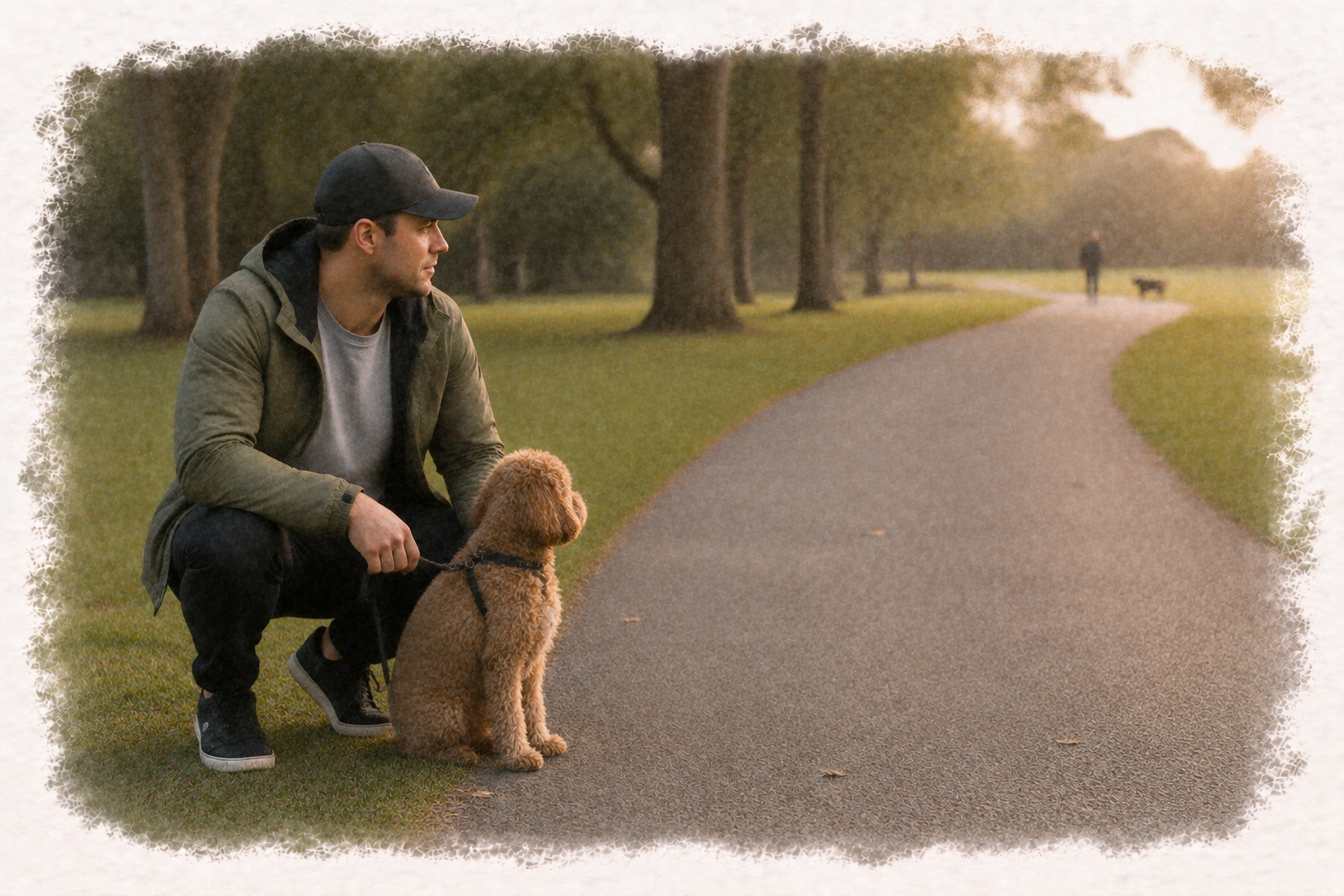
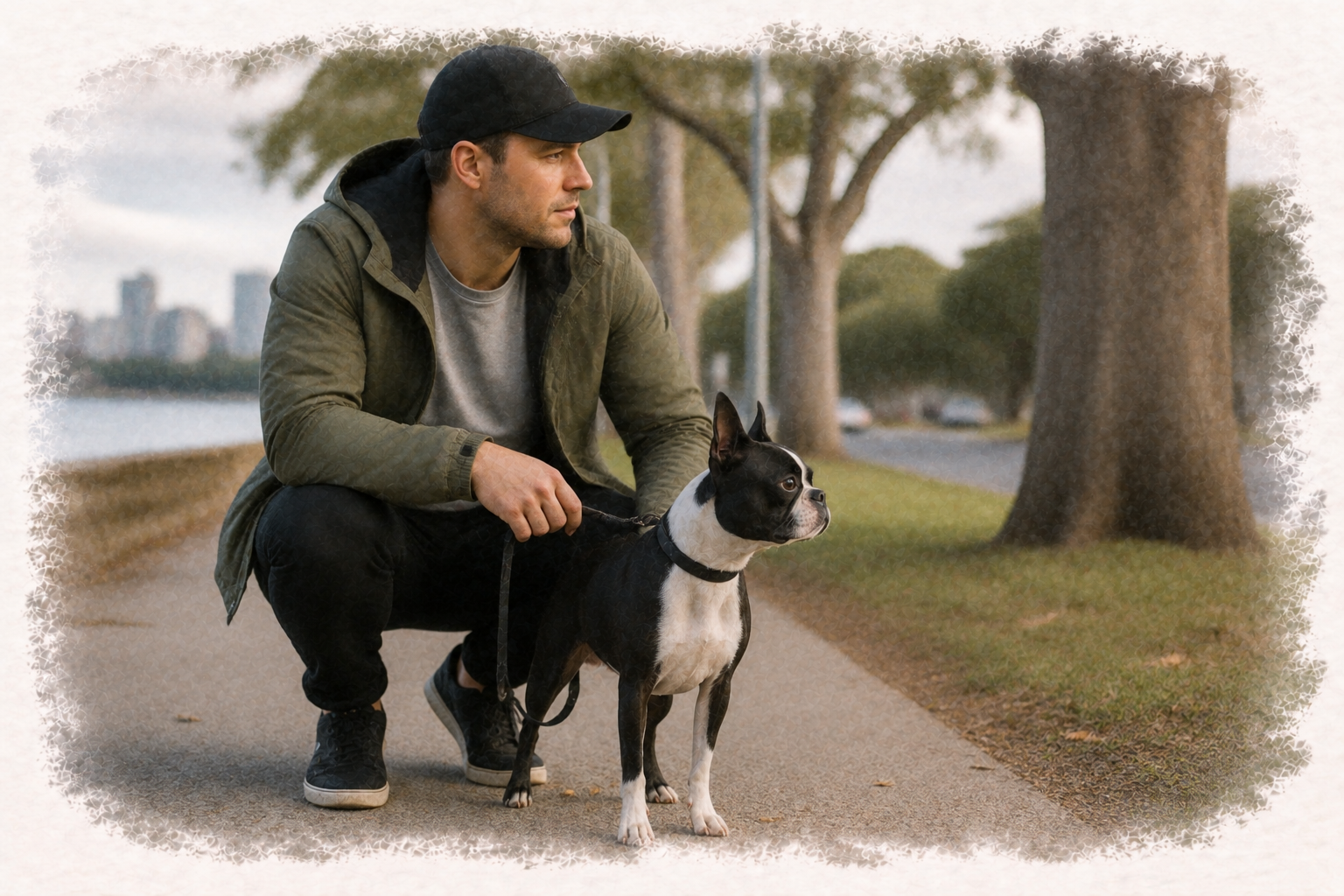
That said, I am not against walking a dog on a flat collar and an ordinary lead. It is exactly what I do with my own dog.
The basis for that is simple. He doesn’t pull. So there is no pressure on his neck to speak of.
I communicate with him verbally. If I ever do stop his movement with the lead, it is a casual moment walking down the street, and I soften it immediately.
It is infrequent, it is brief, and it is nowhere near enough to do harm.
Could I soften it further with a harness? Yes. Should I?
No — because he is body sensitive and hates them. Putting a harness on him is more aversive than anything about our current setup. Harnesses deserve their own conversation another day.
That is the trade-off, weighed up honestly for the dog in front of me.
Length: the two extremes
Length matters for the same reason everything else does. How comfortable your dog feels, and how comfortable you feel.
I don’t want to see people at either extreme.
Too short and the dog is micromanaged. They can’t go anywhere, can’t sniff anything, can’t do much of anything. That dog’s life is worse for it.
Too long and you have handed a dog enough freedom of movement to compromise someone who can’t absorb it. Someone elderly. Someone easily knocked off balance.
Giving your dog the opportunity to put you in a compromised position is naive. Don’t compromise your dog, don’t compromise other people, and don’t compromise yourself.
The dog, and the street you’re on
Within those extremes, two things decide the length.
The first is the dog. Some thrive on more structure and clarity — a slightly shorter lead that keeps them with you and makes it easy to get their attention.
Others thrive on agency. Room to move out, come back, set their own pace.
The second is the environment, and in Sydney that changes street to street.
Paddington, Surry Hills, Balmain — narrow footpaths, cars coming in and out of driveways, a bit hectic. A long lead there is not the smartest decision available to you.
Shorter lead, and learn to handle it well.
Out in the Hills, or down in the Shire, where there are grassy verges and wide footpaths — different environment, different answer. It can be longer.
Relationship first, freedom second
My own order of operations goes like this.
First I want a dog who is genuinely comfortable in the world. Not hectic. Not frantic. Not flying off the handle at a person, a dog, a cat or a pigeon.
A dog who is comfortable in their own skin walking down the street. That is goal one.
Then I give them more agency. And at the same time I learn to handle the lead well enough to actually deliver it.
Well enough to let the length out and bring it back in smoothly. Well enough that when I do bring him close, there isn’t a loop of lead around my ankles or his.
Three metres, two gears
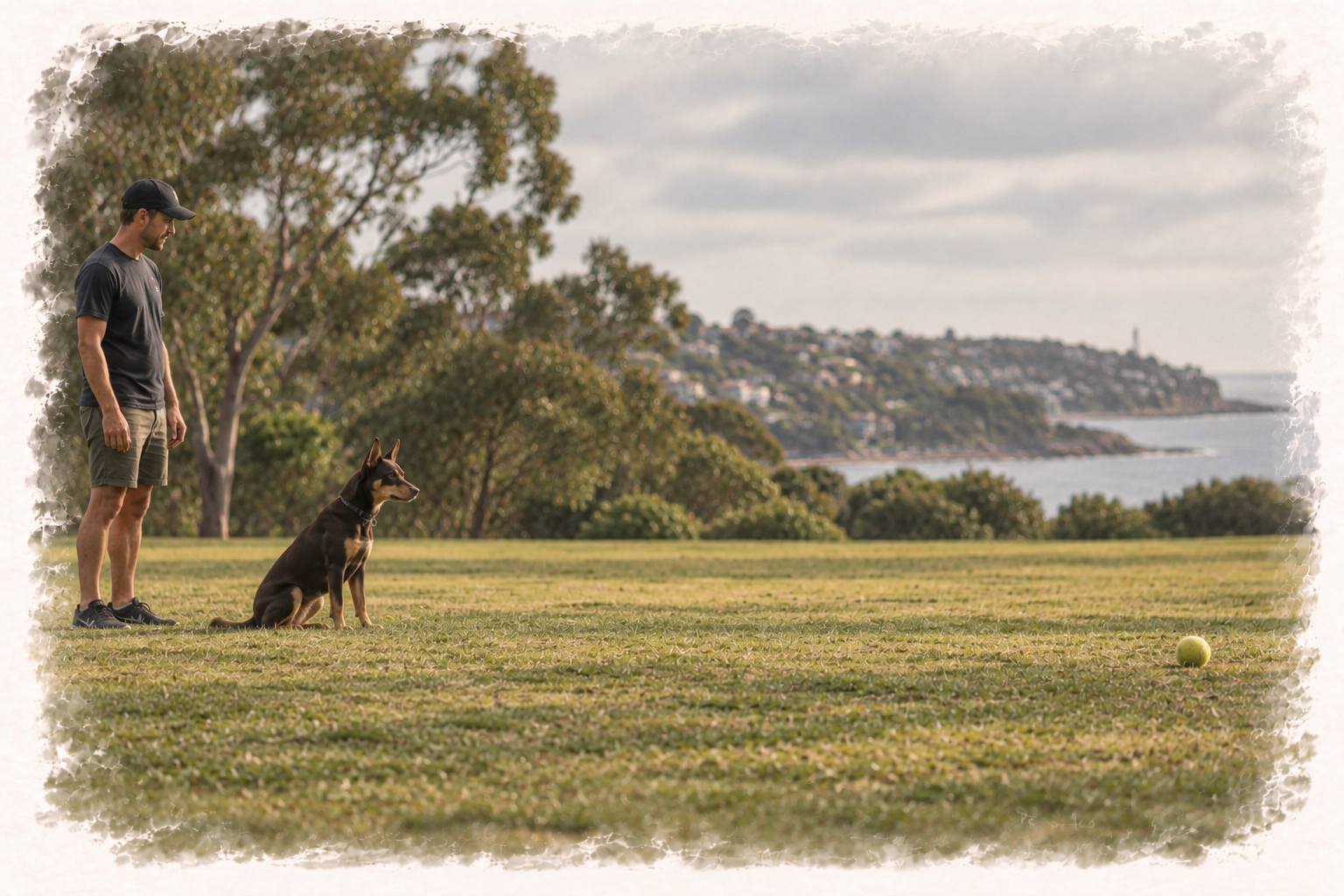
What I actually use is a three metre flat lead.
I think of it as driving a car with two gears.
Most of the time it is open. Off you go. He has real freedom of movement inside those three metres.
Then we hit a busier street, or a house where a dog barks at the fence, and I want more control. So I bring it in.
Shorter does not mean tight. That distinction is the whole game.
It is like driving a race car through the city. You need to brake fast, corner fast, respond fast. Then you hit the country roads and you open it up again.
Long lines for recall
If recall isn’t reliable yet, practise on a long line rather than hoping for the best in a park.
You can graduate up. Three metres, then five, then ten, then twenty.
How far you go depends partly on the breed. A gun dog who naturally works wide of you might genuinely need twenty metres, because ten is so short it just creates frustration.
So the variables stack up. How good a handler you are. The environment. The type of dog. Your own confidence and ability.
All of it underpinned by the same rule. Don’t compromise anybody.
Now to the ones I argue about
Start with the flexi lead, because it is the one most people already own.
You see plenty of the public using them. You rarely see a trainer using one.
There are two reasons. You don’t have much real control, and there is constant pressure on the lead — which is the thing we are trying to avoid.
I would never tell someone to go and buy one.
Occasionally I meet a client already using one and think, that is not your problem. Leave it, we have bigger things to work on.
I said exactly that to someone recently. We worked on other areas first, then got into the leash walking properly.
On reflection I changed my mind. Her dog is reactive. She needs more effective control than a flexi lead can give her. So it had to go.
Worse again: the bungee lead
If the flexi is unhelpful, the bungee is actively working against you.
They get sold as a clever fix. It softens the blow when they pull.
It does not solve anything. Your dog is pulling. Making pulling more comfortable is a strange way of trying to stop it.
Here is the mechanical problem, and it matters.
When we are working on pulling or reactivity, what we want is an absence of pressure. The lead stays loose. It is a safety net to catch them, not a restraining device.
On a solid flat lead, a dog hits the end and it goes bump. You catch it and soften within a second.
That one second is everything. You have avoided opposition reflex — the instinct to pull against pressure. The dog is no longer restrained, so they become coherent again.
Now you can get a treat in front of their nose. You can communicate. You can walk them away.
A bungee does the opposite. It catches, then holds the pressure, then builds it. One, two, and the opposition reflex is on fire.
Now that dog is pulling ten times harder than they ever would have on a flat lead handled well.
In all my years doing this I can think of two cases where the bungee wasn’t the problem. I can think of hundreds where it was.
The worst lead ever invented
Worse than the flexi. Worse than the bungee.
The double lead. One handle, then a fork like a snake’s tongue, with a dog on each end.
Think about what you have just built. Two dogs, physically tied to each other, with no way for either of them to move away.
They will compete. They will push to get in front of each other. They will rile each other up, and the only thing holding the whole arrangement together is you.
Every other lead on this list creates pressure between you and your dog. This one creates pressure between the two dogs as well.
Unless you have something like a pair of husky's who are deliberately meant to be pulling, I can’t think of a situation where it helps.
For everyone else on the footpath, it is a show.
The short version
There is no single right lead. There is the right lead for this dog, this handler, and this street.
What stays constant is the goal underneath. A loose lead, as often as possible.
Pick the one that makes that easiest, get good at handling it, and throw out the one with two dogs on the end.