Should You Keep Your Dog in a Stressful Situation?
You’re at a family gathering. Your dog is unsettled. They’re panting, scanning the room, can’t find a place to land.
Do you stay or do you leave?
It is one of the most common questions I get. And the honest answer is:
it depends.
Not because the question is unanswerable. Because the right answer is different depending on what is actually happening in front of you. There is no blanket rule that works across all dogs, all situations, and all levels of stress. What there is, is a framework for thinking it through.
First question: uncomfortable or distressed?
This is the most important distinction. And it is not always obvious.
Uncomfortable means the dog is aware of the stressor, finding it difficult, but still functioning. They can take a treat. They can make eye contact with you. They are working through something challenging but they are still in there, still accessible, still able to regulate if supported.
Distressed means the dog has crossed a line. They are incoherent. They cannot settle. They are showing physical signs that the stress system has taken over — excessive panting, drooling, shaking, unable to respond to you at all, desperately trying to escape.
A dog that is uncomfortable but can work through it, with your support, may genuinely benefit from staying. Development does not happen inside the comfort zone. It happens at the edges of it. A dog that is gently stretched, supported through a difficult moment, and comes out the other side builds something real. A positive emotional memory. A new data point that says: I got through that.
A dog that is distressed should be removed. Not because you are giving up, but because the emotional memories being laid down in that state are not useful ones. They are traumatic ones. Keeping a dog in genuine distress does not build resilience. It builds a deeper association between that type of situation and overwhelming fear.
The question is not whether your dog is stressed. Stress is part of life and part of development. The question is whether the level of stress is one they can process and grow from, or one that is causing damage.
Second question: what is the stressor doing?
The direction of pressure matters as much as the level of it.
Is the stressor building? Getting louder, closer, more intense? Is it steady, holding at the same level?
Or is it beginning to ease off — the crowd thinning, the noise settling, the trigger moving away?
This changes the calculation significantly.
If the stressor is increasing in intensity and there is no sign of it relieving, keeping the dog there means asking them to manage rising pressure with no end in sight. For most dogs in most situations, that is a case for removing them.
If the stressor has peaked and is beginning to ease, the picture is different. A dog that can hold on while the pressure reduces, and then experience genuine relief as it does, has gone through something genuinely valuable. They have learned that difficult things pass. That they can tolerate discomfort and come out the other side.
That is a powerful emotional memory. It is worth having if the dog is capable of making it through.
If the stressor is stable — neither worsening nor easing — the question is how long the dog needs to hold at this level, and whether they can. A few minutes of uncomfortable but manageable is different to an hour of it.
Third question: intensity and duration
These two variables work together.
A short, intense experience is a very different thing to a long, moderate one. A dog that spends five minutes in a high-intensity situation and is then removed is having a different experience to a dog that spends three hours in a moderately stressful one.
High intensity for a short time can be manageable. It can even be useful if the dog comes through it. High intensity for a long time is a different matter entirely.
Low to moderate intensity for a longer period can build genuine tolerance if the dog is coping. But if the duration is extended past the point where the dog can regulate, the stress accumulates. What started as manageable becomes too much simply through the weight of time.
Neither intensity nor duration alone tells the full story. Both need to be assessed together, against the individual dog in front of you.
Staying is not the same as leaving them to it
There is an important distinction here that gets lost. Choosing to stay in a situation does not mean the dog is on their own.
If you decide to stay and help your dog work through something, that decision comes with an obligation. You support them. Actively.
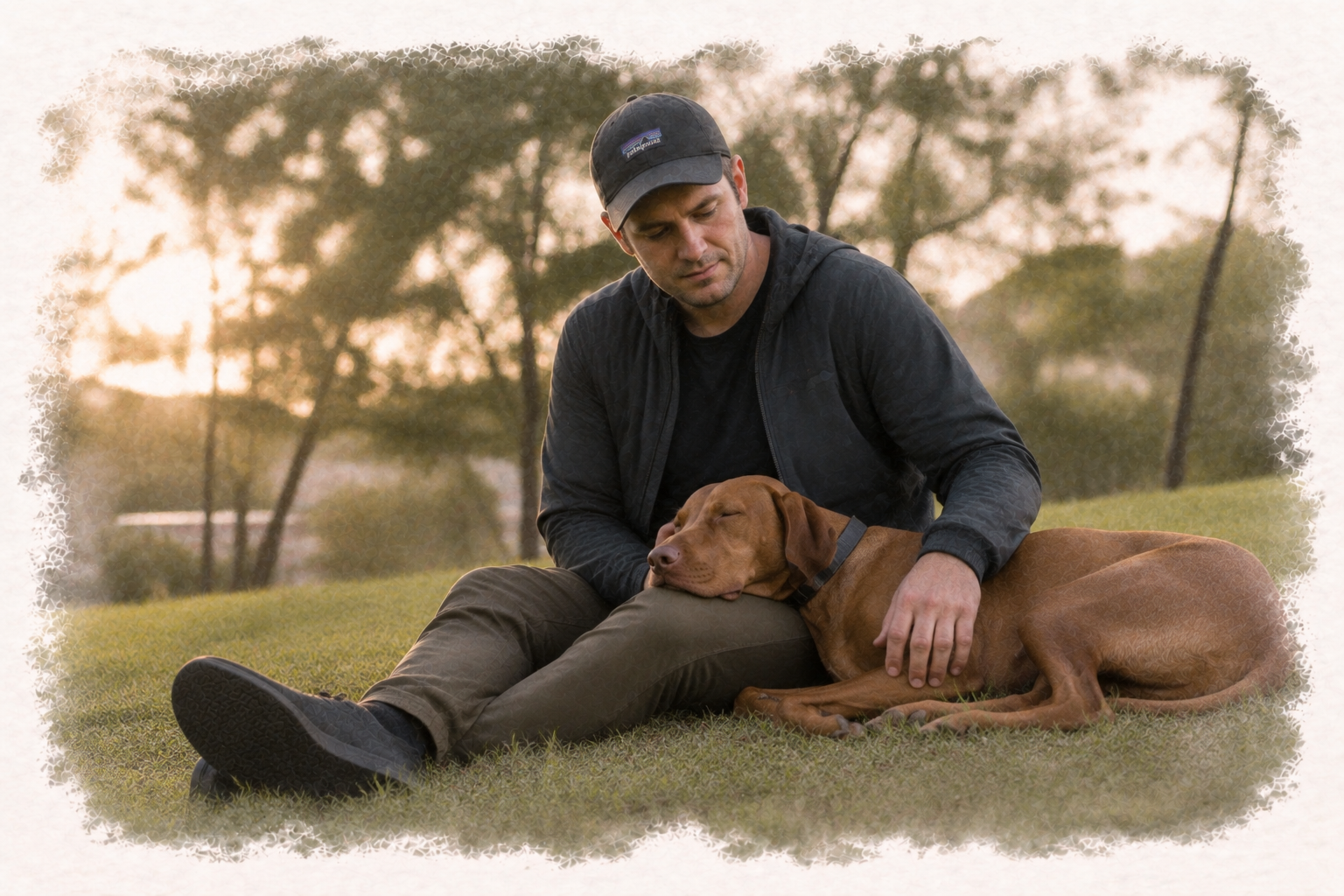
That might mean simply being close. Physical presence matters enormously to most dogs. It might mean pats, or contact, or a hand resting on them. It might mean talking to them calmly — the words themselves don’t matter, but the tone and the steady presence behind them do. It might mean food, if they’ll take it. It might mean a bit of play to shift their state.
What it never means is expecting them to suffer through it alone.
And it certainly never means punishing them for struggling. Correcting a dog for showing they are stressed does not teach them the situation is safe. It teaches them that showing stress produces something unpleasant. The stress does not go away. It just stops being visible. That is not progress — it is a dog who has learned to hide the signals you most need to see.
The choice to stay is a choice to work through it together. If you can’t support the dog through it, you should not be asking them to stay in it.
What you’re actually trying to do
The goal in these moments is not to toughen the dog up. It is not to expose them to stress for its own sake. And it is not to protect them from every difficult experience.
The goal is to help them build emotional memories that serve them.
A dog that works through something difficult, with your support, in a way they can handle, comes away with a memory that says: that was hard, but I managed it, and I wasn’t alone. That memory is useful. It builds confidence. It increases their capacity for next time.
A dog that is pushed past what they can handle comes away with a memory that says: that was overwhelming and I couldn’t cope. That memory is not useful. It compounds the problem.
The difference between those two outcomes often comes down to reading the dog accurately in the moment. Not applying a rule. Not defaulting to always staying or always leaving. Actually looking at the dog, reading what they are communicating, and making a decision based on what you see.
There is no rule. There is only reading
This is the part some people find frustrating. They want a clear answer. Always remove the dog or always work through it.
The clear answer would be simpler. It would also be wrong much of the time.
Every dog is different. Every situation is different. Every moment within a situation is different. The dog who was coping five minutes ago may not be coping now. The situation that seemed like it was going to be too much may have eased. The call you make at the start may need to change as things develop.
What matters is the ability to read the dog accurately, to assess the situation honestly, and to make the call that is right for this dog, in this moment, rather than the one that feels most decisive or most comfortable for you.
Sometimes that means staying. Sometimes it means leaving. Often it means staying for a while, reading what happens, and then making a fresh call.
The skill is the reading. The rule is just a shortcut that does not always take you where you need to go.