Jumping Up: Why Ignoring It Doesn’t Work
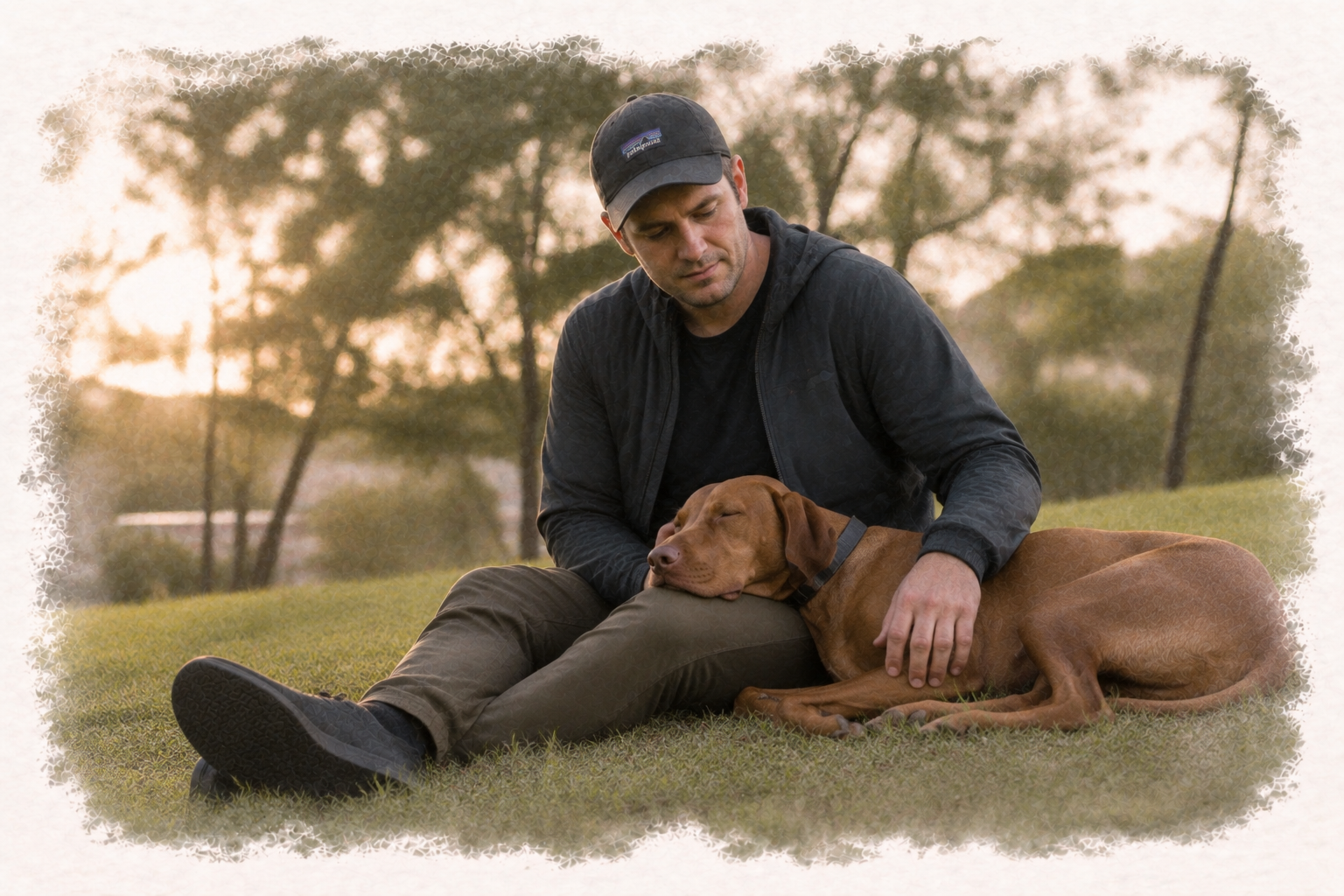
My wife walks through the front door. Otis jumps up at her. She crouches down, pats him, embraces the whole thing.
I walk through the same door ten minutes later. Otis jumps up at me. I think, mate, that’s kind of annoying.
Same dog. Same door. Two completely different responses.
Jumping up is one of the most common things people ask me about. And almost every conversation starts in the wrong place.
It is a preference, not a right answer
People want to know whether dogs should be allowed to jump up. I don’t think that question has an answer.
I don’t love it. I don’t enjoy being sprung on or surprised. That isn’t really a decision I made, it is just how it lands on me.
My wife loves it. She goes down to him every time.
Neither of us is right. It is preference, and preference is allowed.
Which means my expectations have to be realistic
Here is what that dynamic actually costs me.
I cannot expect Otis not to jump up. He gets rewarded for it most days. Not only by my wife — by other people too.
What would not be fair is mixed messaging at the front door. Jumping works for her, works for them, but somehow not for me, and somehow not for the next stranger who walks in.
Dogs are optimists. They are opportunistic. He is going to look for the window where it works.
So I hold realistic expectations, and I manage the moments where the answer needs to be different.
Think about who is coming through the door
When guests come over, we are sensible about it. We think about who is walking in first.
If that person is going to embrace Otis and wants him to jump up — why would I do anything at all?
The dog wants to jump up. The person wants him to. Be normal. Let them have their thing.
Context matters here, and in our case the context is good. Otis regulates himself. He doesn’t get so overstimulated that he’s a menace for the rest of the evening.
If he did, I’d handle it differently. But he is a well-regulated dog who enjoys people. When they want to greet him and he wants to greet them, I’m not going to police it.
When the stars don’t align
Plenty of times they don’t. So we have contingency plans. None of them involve telling Otis off.
An unexpected knock at the door — a delivery — and Otis goes away before I answer it. Behind a baby gate, a door, into his crate.
You are not going to be part of this interaction, buddy. I can’t set you up to succeed here, and what you are expecting isn’t what is about to happen.
Someone actually coming inside is the same principle. Maybe they’re elderly. Maybe it’s one of the kids’ friends. Maybe we’re carrying bags in and out. Maybe they simply don’t want a dog jumping on them.
The reason doesn’t matter. If the preference is no jumping, Otis isn’t involved in the meet and greet. He is behind the barrier.
Once the dust settles
Then I bring him out on my own terms. Sometimes I don’t bring him out at all — if there’s a toddler running around, the circumstances might just not line up for him.
If he does come out and I still don’t want jumping, I stack a few more things in his favour.
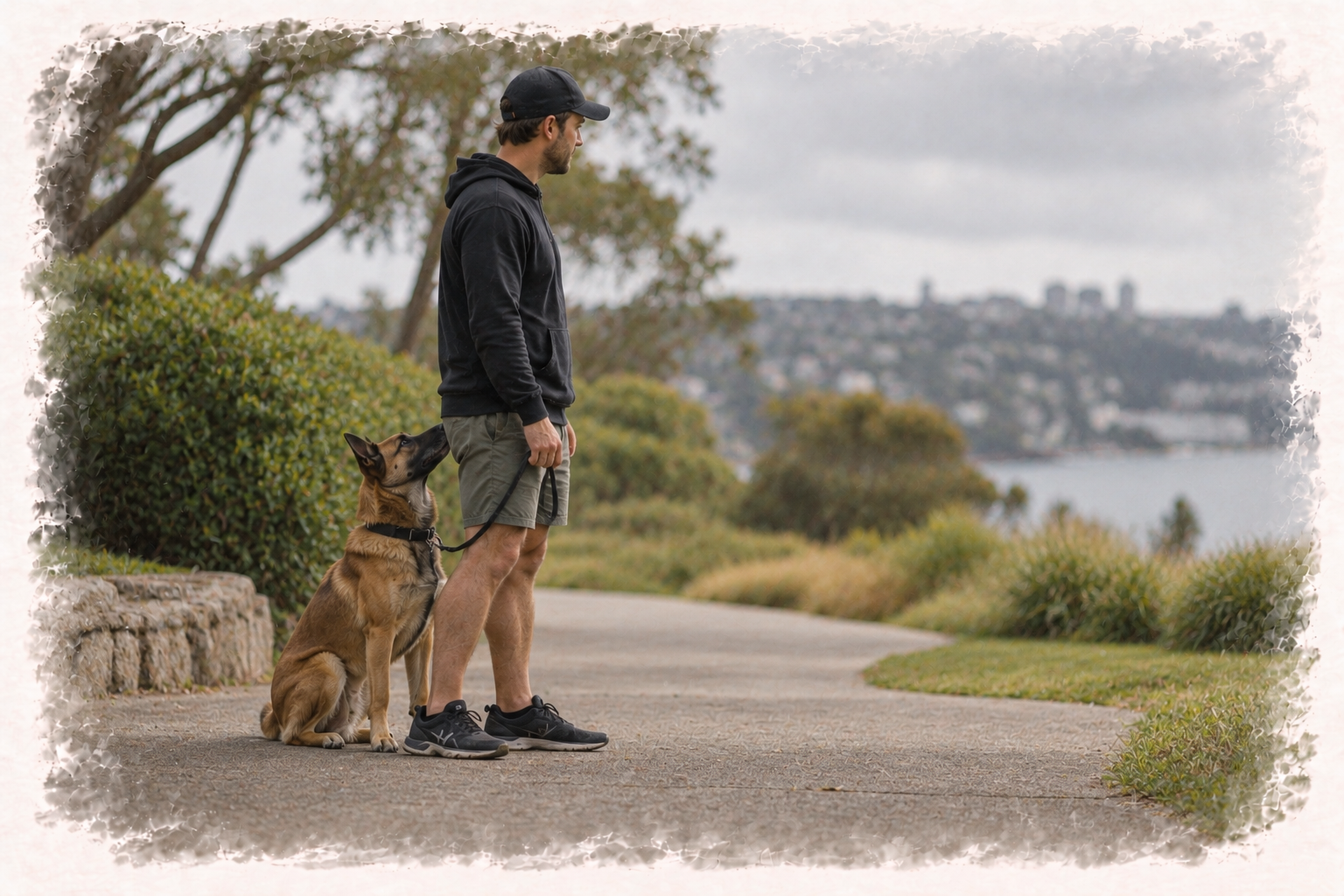
He might stay on the lead. If a guest could get knocked, I’ll make sure they’re sitting in a chair before he arrives. Accidents happen.
I’ll give him something calming that doesn’t involve people — chewing, licking. Something that brings him down rather than winding him up.
What I won’t do is hand my guest a tennis ball. They didn’t come over to play tug of war in my living room.
And him being out doesn’t mean he stays out. If people start moving around, if food comes out, if the whole thing stops being winnable for him — he goes back behind the barrier.
We make it comfortable back there. These days he mostly just falls asleep.
All of that is management — deciding what he has access to, when, and for how long. And we only do it when we need to. It is not a blanket rule.
The advice that doesn’t work: stand still and ignore it
This is the most common advice out there. I think it is one of the least helpful.
Good luck. Most dogs will push the agenda until you cannot ignore it. You will move. You will interact, positively or otherwise. They are very good at this.
There is a name for why. It is called an extinction burst.
When a strategy stops working, almost nobody shrugs and tries something else. They try the same thing harder first.
My own version of this happens at my car. I think I’ve pressed the button. In my head it is unlocked. I pull the handle and it doesn’t open.
Do I calmly press the button again? Rarely. I jam that handle, hard, usually more than once, because I’m annoyed it didn’t work the first time.
That is what happens when you ignore the jumping. It didn’t work, so he does it twice as hard. At which point you are forced to interact.
And he learns something specific. That is the level required to get your attention. Next time he skips the gentle version entirely and goes straight there.
The advice that doesn’t work: turn your back
The dog jumps, you spin away. Same idea as ignoring, and worse in practice.
You aren’t actually ignoring anything, because movement is rewarding. If your dog works out that he can make you move, he will enjoy that enormously.
Before long he has you doing the waltz. Spinning, ducking, trying to get away from him in your own hallway.
At that point he isn’t even jumping for the original reason. He is jumping because you dance.
I see it constantly. A full routine in the corridor, every single day. If it hasn’t worked after a couple of days, it isn’t working.
What the kennels taught me
The clearest version of this I ever saw was years ago, working in rescue.
Volunteers came in every day to walk the dogs. The staff trained all of them to turn their backs when a dog jumped.
Around one o’clock, a wave of volunteers would go into the kennels at roughly the same time. For those dogs, that was the most human contact they would get all day.
And the dogs worked out something the volunteers hadn’t. They could hold a human’s attention far longer by making them dance around the kennel than by sitting quietly and going for a walk.
They did want the walk. They just knew they could stretch this part out first.
Volunteers would come out baffled. Doesn’t he want to go out? Why won’t he sit?
Because the interaction was the thing he wanted. Connection. The feeling of a person actually engaging with him. More than the walk itself.
Which brings it back to the only question that matters.
Work out what they are actually after
Before you try to address jumping up, you need to know why it is happening.
Sometimes they want your interaction. Sometimes they want to drive the interaction — to make you move, make you dance. The motive is connection, delivered in a way most people find rude.
And sometimes it has nothing to do with interaction at all. Sometimes they just want information.
We carry a lot of information in our faces. Our breath. All those openings in one head, every one of them giving something away to a nose.
A dog jumping for information isn’t asking you to engage. They are asking to read you.
Denying that can make things worse. If the only way they know to get information is up there, and you block it, the angst goes up. Then the extinction burst arrives and they try even harder.
How I actually greet a dog who jumps
Nine times out of ten, whatever the motive, I go in with one agenda. Bring the heart rate down.
As long as it’s safe, I go down to their level. That makes it far easier for them to keep four paws on the floor — I’ve removed the reason to climb.
Gentle tone. Slow, deliberate movement. The interaction is calming and soothing rather than exciting.
I’ll often ask for something they already know, like a sit. It gives them a way out of the what are we doing frame of mind and into yeah, I can do that.
If they want information, I let them have it. I’ll let a dog sniff my ears. Most of them finish, think right, good, see you later, and wander off.
Do that two or three times with the same dog and you become the person who is safe and predictable. They clock you at the door and carry on with their day.
It takes repetition. Nobody gets this on the first attempt.
But with repetition the dog learns something useful. When this person walks in, it is about this — not that.
Fill the cup somewhere else
Here is the part that gets skipped. Stopping the behaviour is not the job. Meeting the need underneath it is.
For my wife, the jumping is mutually beneficial. She wants that connection and so does he. Nothing needs fixing.
I want connection with my dog too. I just want it in a different form.
So that was on me. He used to try for it the only way he knew, and I had to actively teach him that we don’t do that one together — but we can do this instead.
Same with a higher energy dog. If I take the big, boisterous greeting off the table, that energy has to land somewhere else in their day.
Take something away and you owe them a replacement.
The short version
Decide what you actually want, then be honest about whether the household is sending that message consistently.
Manage the doorway instead of relying on your dog to get it right under pressure.
Don’t ignore it. Don’t dance. Work out what they are after and give them a calmer way to get it.
Be predictable, be calm, and meet them where they are. That is how the jumping stops.