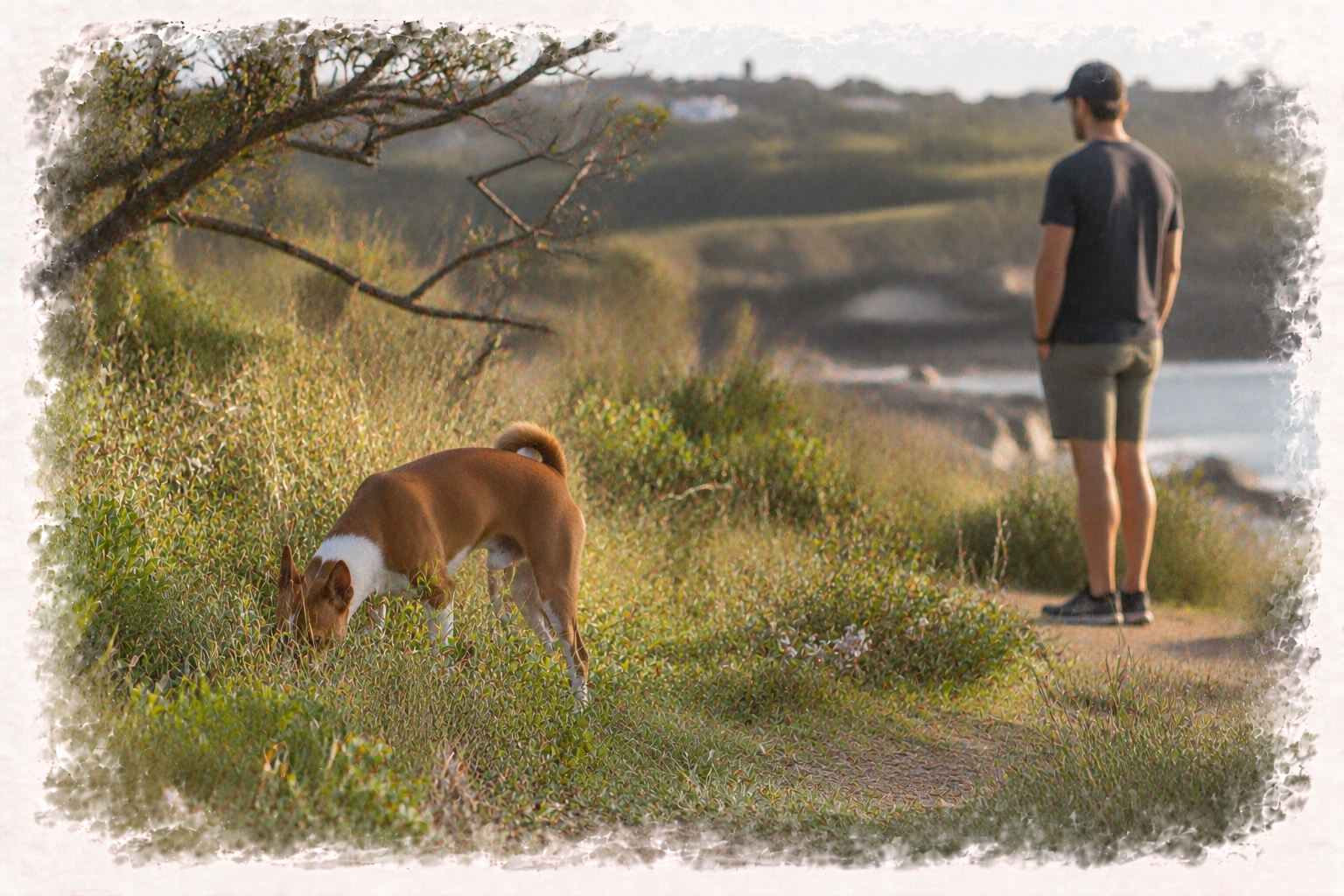
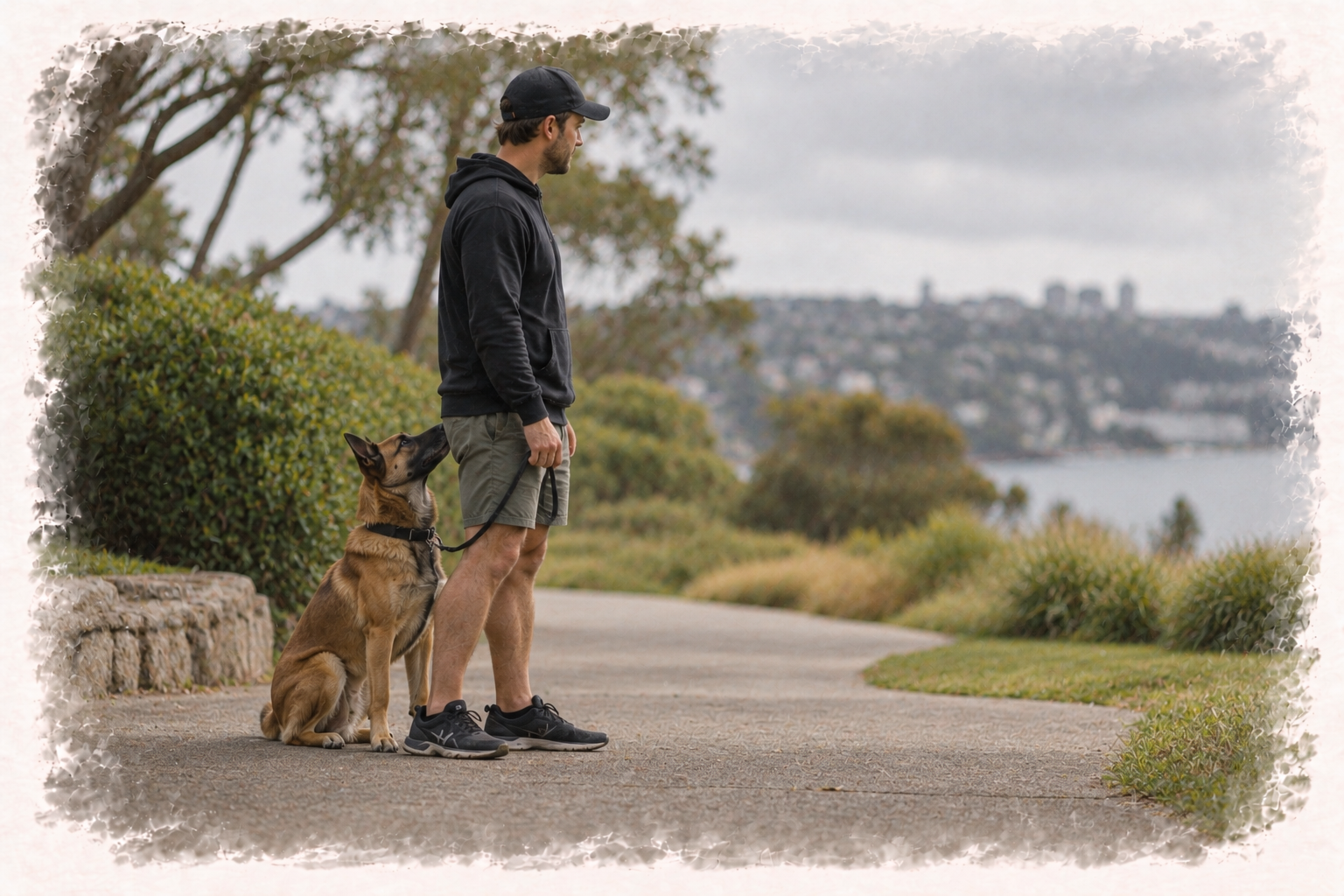
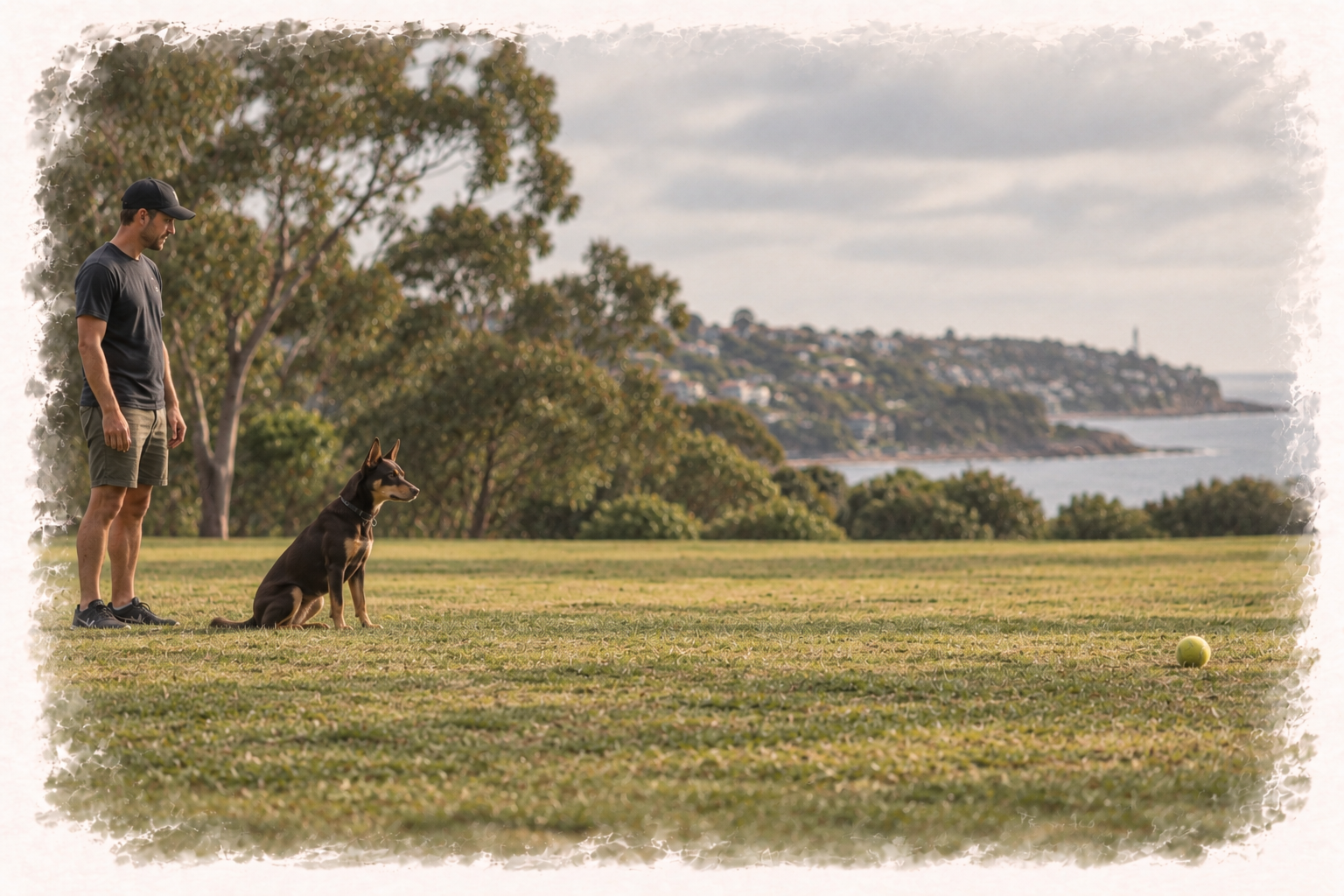
A man calls his dog at the park. The dog lifts his head, looks straight at him, considers it, and goes back to sniffing.
Three months ago that recall worked every single time.
He reaches into his pocket and produces a piece of the same dry kibble he has been using since the dog was ten weeks old.
There are two separate problems in that scene, and both are about rewards.
Three questions I get constantly
Do I have to reward them every time?
I don’t want to have to reward them every time. They should just do it.
How long do I have to keep rewarding for?
The answer to all three is that it depends. But there are real variables behind that, and once you know them it stops being guesswork.
“He should just do it”
Let me deal with that one first, because it comes up a lot and it needs reconsidering.
Dogs don’t work like that. They are living things, motivated by positive outcomes and keen to avoid negative ones.
Ask your dog for something and make it worth nothing to them, and the odds of them doing it drop. That is not defiance. That is how motivation works in every animal including us.
And if the plan is to simply bully them into it instead, that is a grim way to build a relationship with something you supposedly love.
Early on, pay as often as you can
Whether you pay every time depends entirely on where your dog is in learning that particular behaviour.
At the start, more is better. Every time is a strong phrase and a hundred per cent is next to impossible, but aim as high as you can.
You are building one specific piece of information. Doing this thing gets me paid.
Pay too thinly at this stage and your dog learns something quite different. Sometimes this pays and sometimes it doesn’t. I’m not sure it’s worth my attention.
A dog who has learned that will go and find something else to do.
A new place is almost a new behaviour
There is a second moment where you go back to paying heavily, and most people skip it.
Say the behaviour has been going well for a while. You have thinned the rewards out and you are still getting good results.
Then you ask for it somewhere your dog has never practised it.
That is the moment to go back to rewarding very often, because the context has changed and dogs are not good at generalising.
What you are actually building is a new association. Doing this is brilliant here.
Do that in enough different places and your dog gets genuinely good at performing in new places. But it takes a lot of places before that becomes true.
When to start thinning it out
Once your dog is doing it well in that situation — consistently, happily, without hesitation — you can reduce the rate of reinforcement.
At no point do I ever remove rewards entirely.
I might change what the reward is. I might go from food to something less valuable. I might change how often it arrives.
What I won’t do is phase it out quickly. Your dog will notice the job stopped paying, and reasonably conclude there is no point doing it.
Same with value. Dropping from excellent food to dull food overnight reads the same way.
Make it a lottery
The best way to thin out reinforcement is a variable reward schedule.
Your dog never quite knows which repetition pays. It is a lottery.
It is also the exact psychology the pokies run on. The hook is not the winning. The hook is not knowing.
Variable rewards hold attention better than consistent ones. They keep a dog interested and engaged in a way that predictable payment does not.
And it matters that you actually get to this stage, rather than paying heavily forever.
Nobody stays keen on the same pay
Think about your own work.
Do the same job for long enough, on exactly the same money, and something shifts. You get a bit bored of the task. You start to feel you have earned a rise.
You want some variation, and you start looking around for the more interesting parts of the day.
Your dog does the same arithmetic. Identical payment, forever, slowly stops being motivating.
Vary what you pay with, not just when
Value is the other half of this, and it is where I see the most obvious mistakes.
Someone rewards with low-fat, no-fun kibble and then tells me their dog won’t do it.
I wouldn’t do it either. The pay is rubbish.
So mix up what is in the bag. Some kibble. A middle-tier treat. A premium one. Something that is their particular favourite.
Then it becomes a lucky dip. They don’t know when they get paid and they don’t know what they get.
That combination is what really keeps a dog on the hook.
The good news is that humans are naturally decent at variable rewards and genuinely hopeless at rewarding every single time. Which is lucky, because every single time was never the best approach anyway.
Rewards are not only food
Food is the obvious currency but it is not the only one.
Sometimes you throw a ball. Sometimes you engage with them properly. Sometimes you play, or let them chase you. Sometimes it is a cuddle. Sometimes it is just a yes.
The only test is whether your dog finds it rewarding. If they actually find one of those things unpleasant, it is not a reward, whatever you intended.
My own dog sometimes gets a very good treat and sometimes gets a small smile from me. Both are rewarding to him. Both stay in the mix.
The six to nine month wobble
If you have a puppy and you are training hard, keep going. You are doing the right thing.
And know that somewhere around six to nine months, a lot of it will appear to fall apart.
The recall that was perfect gets ignored. The behaviour you had nailed happens less and less.
That is normal. It is adolescence, not failure, and it is not your dog deciding to defy you.
It is also far easier to ride out if the groundwork is already in. That is most of what I am doing in the puppy classes I have starting in January — building the habits and the timing early, so that when the wobble arrives you already know which levers to pull.
What to do when it declines
Go back to basics. That is the whole answer, and there are several levers in it.
Put the frequency back up. Put the value back up.
Change the criteria so you are rewarding something slightly easier, just to get them re-engaged with the activity at all.
Change where you do it. If it has gone to pieces at the park, take the backward step and work on the street, or at home.
And manage the park in the meantime. A long line there means they get far less practice at the thing you don’t want.
All of those levers do the same job. They make the thing you are asking for genuinely enjoyable again.
Who is actually being stubborn
What not to do is put the stubborn hat on and start punishing your dog for no longer listening.
All that achieves is driving their motivation somewhere else entirely.
Don’t phase the rewards out completely either. Take stock instead. Look at what you are doing and what you can change so your dog wants to do this again.
Holding a dog accountable by punishing them and calling them stubborn gets the diagnosis exactly backwards.
In that situation, we are the stubborn ones.