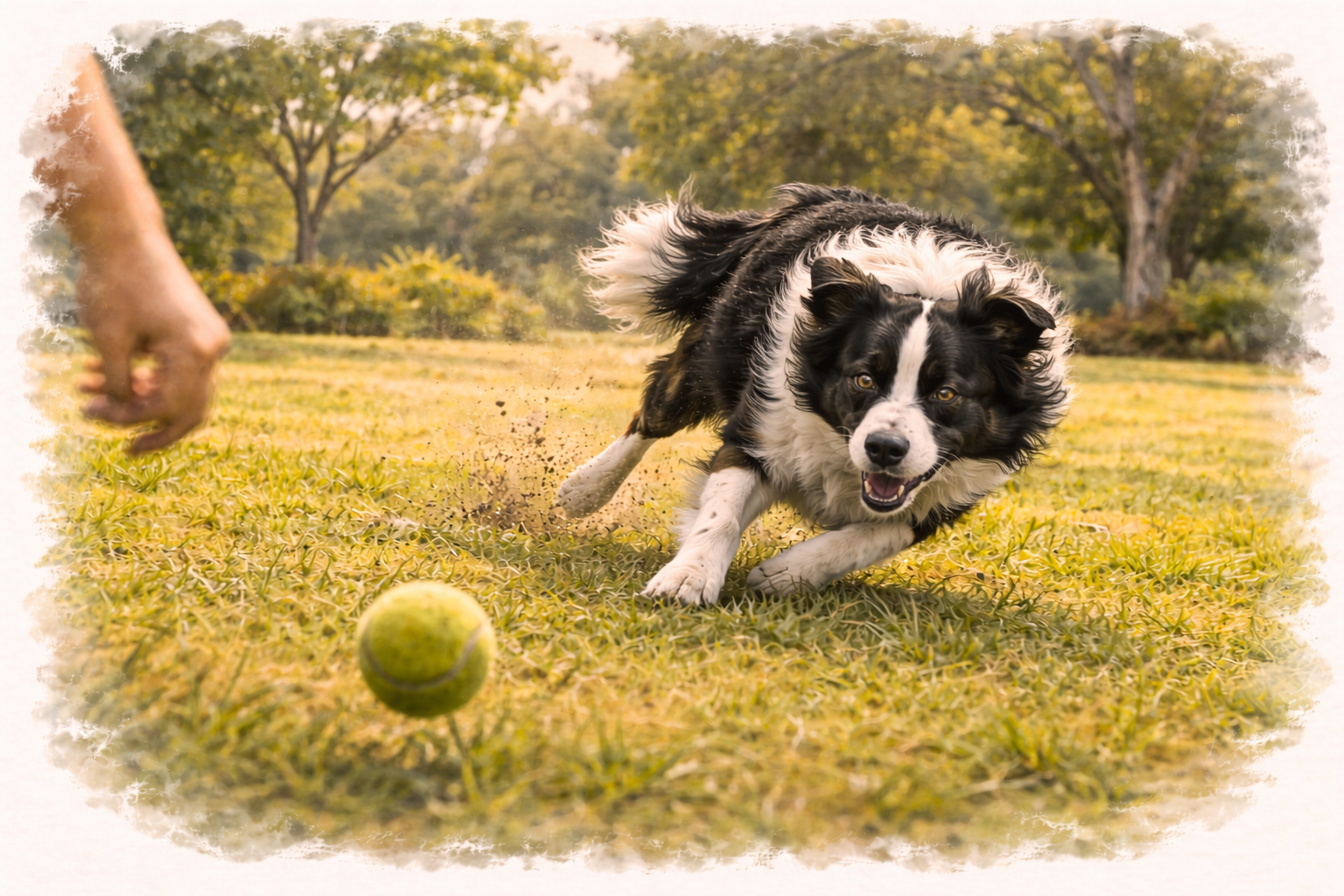
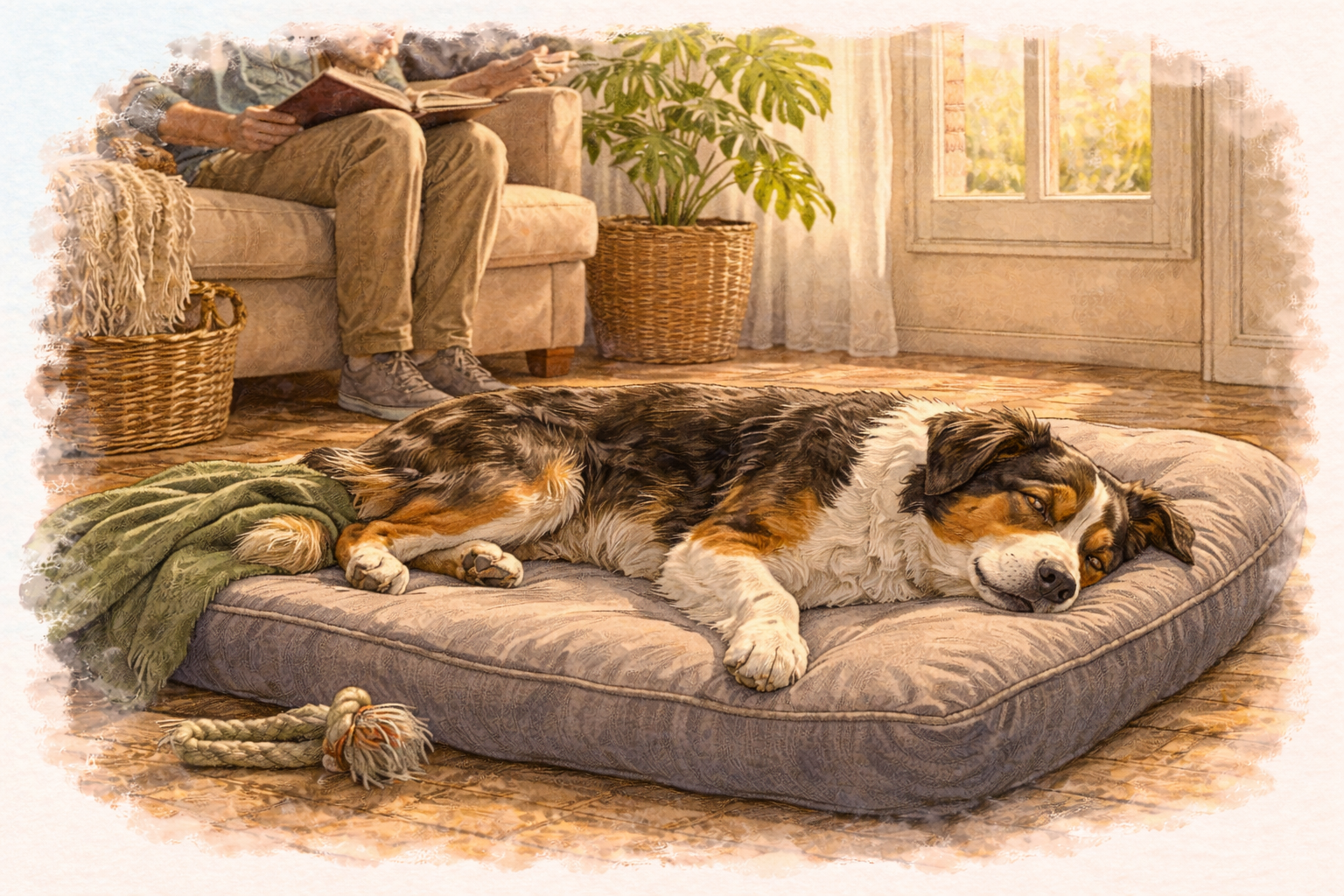
Dog Training Is Not About Perfect. It’s About Better.
A client messaged me last week. Frustrated. They’d been working hard for months. Things were genuinely better. But the walk that morning had been a mess. Their dog had reacted twice. They felt like they were back at square one.
They weren’t.
A bad morning is not evidence that the work isn’t working. It is evidence that dog training is not a straight line, and that perfect is not the goal.
Better is the goal. And better takes time.
Perfect is the wrong target
Most people come into dog training with a version of perfect in their head. The dog that walks calmly past every other dog, every time. The dog that recalls instantly, in every situation. The dog that is settled in every environment, on every day, regardless of what has happened.
That dog does not exist.
Every dog has limits. Every dog has harder days. Every dog has situations that are more difficult than others. And every dog owner has to make peace, at some point, with the fact that the version of their dog they want and the dog they actually have may not be identical.
That is not failure. That is dogs.
The work is not to eliminate difficulty. It is to reduce it, manage it, and build a life with your dog that works well enough — for both of you. Sometimes that means the dog compromises. Sometimes it means you do. Usually it means both.
Accepting that is not giving up. It is the beginning of actually making progress.
Time is your friend
Dog training is slow. Slower than most people expect. Slower than most content online suggests.
The nervous system does not change quickly. Emotional associations do not rewire in a session or a week. Habits — in the dog and in the owner — take time to build and time to consolidate.
But time is genuinely on your side, provided what you are doing across that time is consistent and sound.
A dog that is a little better this month than last month is a dog that will be noticeably better in six months. Not because of a single breakthrough. Because of the accumulation of small, consistent improvements over time.
The owners who get the best long-term outcomes are almost never the ones who found a magic protocol. They are the ones who kept doing the right things, consistently, for long enough that the dog had time to actually change.
That is less dramatic than a transformation story. It is also far more reliable.
Then there are the times it all goes sideways
Even with good habits and genuine progress, life will hand you moments that have nothing to do with making things perfect.
A house move. Bumping into another dog as you round a corner. A new baby. A health scare. A change in routine that throws everything off. A week where you simply could not do what you normally do. A situation that came from nowhere and left your dog stressed, your household disrupted, and your training feeling like it has been set back.
These moments are not anomalies. They are a normal part of owning a dog over the course of a life. They will happen. Planning for perfection does not prevent them. It just means you are less prepared when they arrive.
When they do arrive, the goal changes. It is no longer about making it perfect. It is about making it less bad. Limiting the impact. Managing what can be managed. Getting through it without making things significantly worse.
That is a completely legitimate goal. And it requires a completely different mindset to the one that is chasing progress.
Why good habits are the real insurance policy
Here is what makes the difference between an owner who weathers those disrupted periods and one who feels like they have lost everything they built.
Good habits.
Not protocols. Not perfect execution. Habits. The consistent, repeated things you do with your dog on ordinary days that build their resilience and yours.
A dog that has had months of good sleep, good management, appropriate enrichment, and consistent communication has a nervous system that can absorb disruption better than a dog that hasn’t. They bounce back faster. They regulate more quickly. Their threshold is higher going into the difficult period.
An owner who has built good habits has something to return to. When the disruption passes — and it will pass — they know what to go back to. There is a foundation. It has not disappeared. It may need dusting off and rebuilding in places. But it is there.
An owner who was chasing perfection and never quite got there has a much harder time regrouping. Because they never had a solid base to return to. They were always trying to reach something rather than maintain something.
Regroup, regather, go again
After a hard period, the path back is not to immediately try to resume where you left off. That sets most people up for disappointment.
The path back is to start with the basics. The things that were working before the disruption. The walks, the management, the routine. The simple, consistent things that do not require your dog to be at their best or you to be at yours.
Let the dog settle back into the rhythm before you ask for more. Let your own habits re-establish before you push for progress. Give both of you a chance to find the floor again before you try to build higher.
Most people find that the return is faster than the original build. Because the neural pathways are already there. The habits are already partially embedded. The dog remembers. The owner remembers. It comes back quicker than it went.
Dog training is not a thing you finish. It is a thing you maintain, adjust, and return to across the whole time you have your dog.
The bad walks, the disrupted weeks, the moments where everything feels like it has fallen apart — these are part of that. Not evidence that it isn’t working. Just the reality of doing something real, with a living animal, across the unpredictable shape of a life.
It will get better. It always gets better, when you keep going.