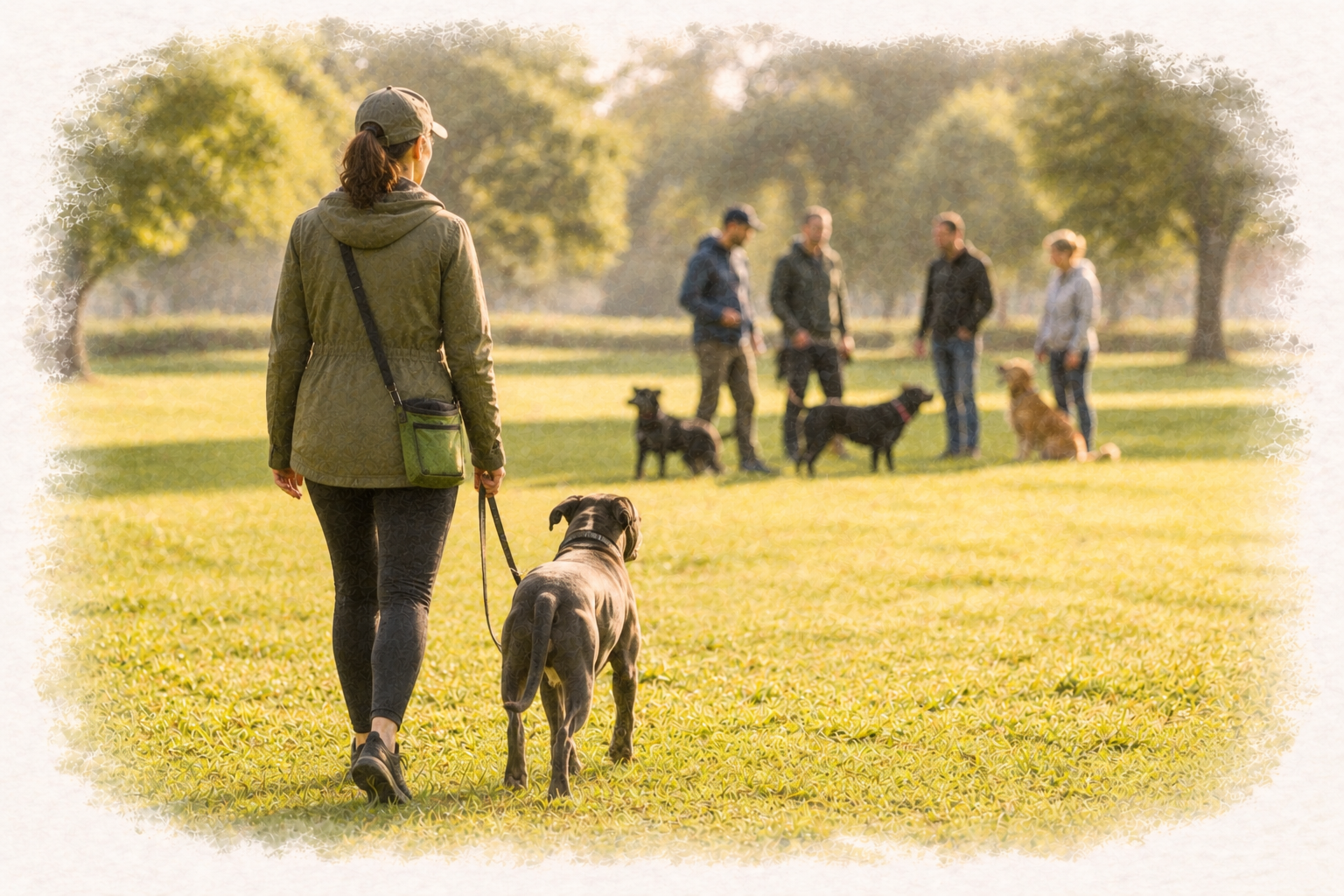
When It Comes to Socialisation, Aim for Boring
Two dogs meet on a path. One owner crouches down, encouraging them. “Go say hi. Go on.” The other owner does the same. The dogs sniff for a second, then the energy tips. One dog jumps. The other stiffens. Within ten seconds it has gone from a greeting to a scuffle.
Both owners walk away confused. Their dogs are “so friendly.” It shouldn’t have gone that way.
What went wrong was not the dogs. It was the aim. Both owners were trying to make something happen. They wanted a positive social experience. They pushed toward exciting. And exciting, for dogs that need to feel safe above all else, is not the same as good.
What socialisation is actually for
The goal of socialisation is not for your dog to love other dogs. It is not to produce enthusiastic greetings or playful interactions on demand.
The goal is for your dog to develop a stable, positive emotional association with the presence of other dogs. To learn, through repeated experience, that other dogs in the environment are not a threat. That the world is predictable. That being near another dog is just a thing that happens — not a big deal, not a crisis, not an event.
That association is built through exposure that is calm and consistent. Not through exposure that is exciting and unpredictable.
A dog that has a hundred calm, uneventful experiences near other dogs has built something solid. A dog that has had ten wildly exciting ones has built something less reliable.
Why every dog needs to feel safe first
Safety is not just a need for anxious or reactive dogs. It is the foundational need for all dogs in social situations.
Even a confident, outgoing dog is reading the environment constantly. They are assessing whether each new encounter is safe. Whether they have enough space. Whether they can predict what will happen next. A dog that feels safe in a social situation can engage from a place of genuine comfort.
A dog that doesn’t — even a dog that looks fine on the surface — is coping rather than thriving.
When we push toward exciting interactions before the foundation of safety is solid, we are asking dogs to operate in a zone that is beyond their actual comfort level. Some dogs manage it. Others do not. And the ones who do not often develop associations with social encounters that are unpredictable, inconsistent, or subtly threatening — even when that was never the intention.
The problem with exciting
Exciting feels good. It looks good. The dogs are playing. Everyone is happy. The owner feels like they’ve done the right thing.
But exciting is high arousal. And high arousal is unpredictable.
A dog in a highly aroused state has less capacity to regulate. They are more likely to misread signals from other dogs. More likely to react before they think. More likely to escalate something that could have stayed calm. The gap between excited play and a scuffle is smaller than it looks — and it narrows further when both dogs are in that state.
For a dog that is already slightly anxious or uncertain around other dogs, the association being built during an exciting, high-arousal interaction is not purely positive. It may feel good in the moment. But the underlying emotional memory being laid down is: this could go either way.
That is not a stable foundation. And over time, a dog that has built their social associations on high-arousal interactions can become unpredictable — friendly one moment, reactive the next — not because something changed, but because their emotional memory of other dogs was never reliable in the first place.
What boring actually looks like
Boring socialisation is not passive. It is deliberate.
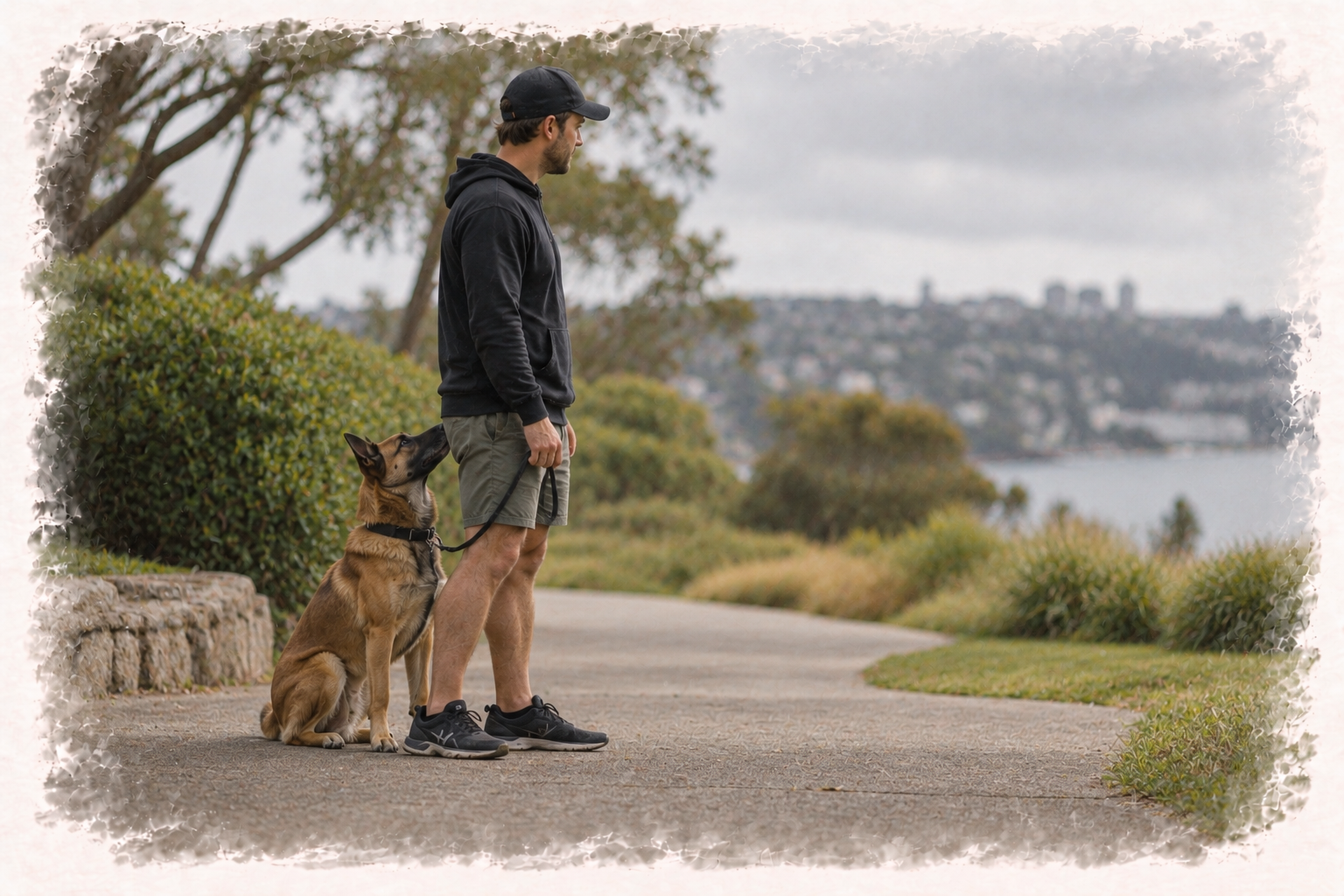
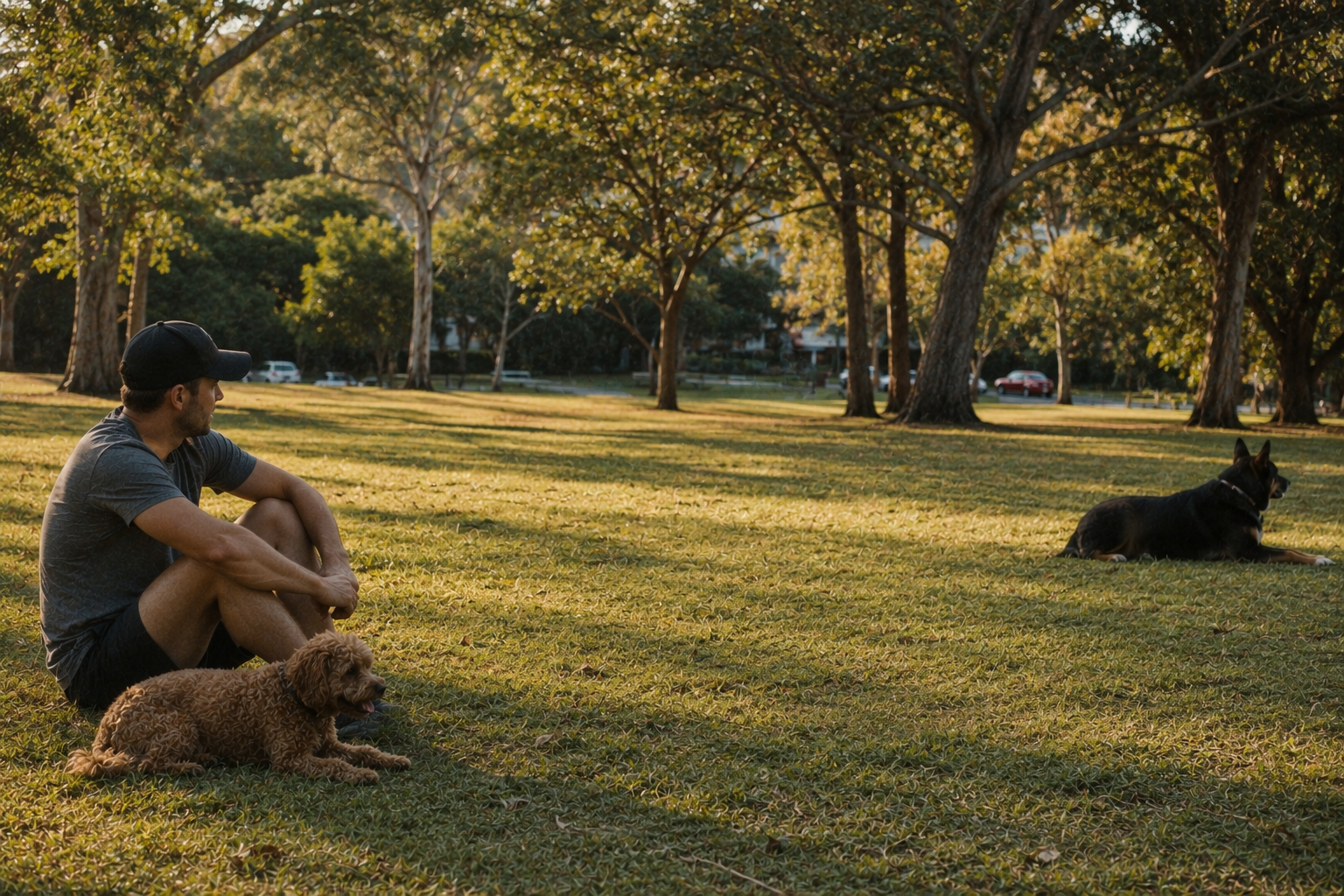
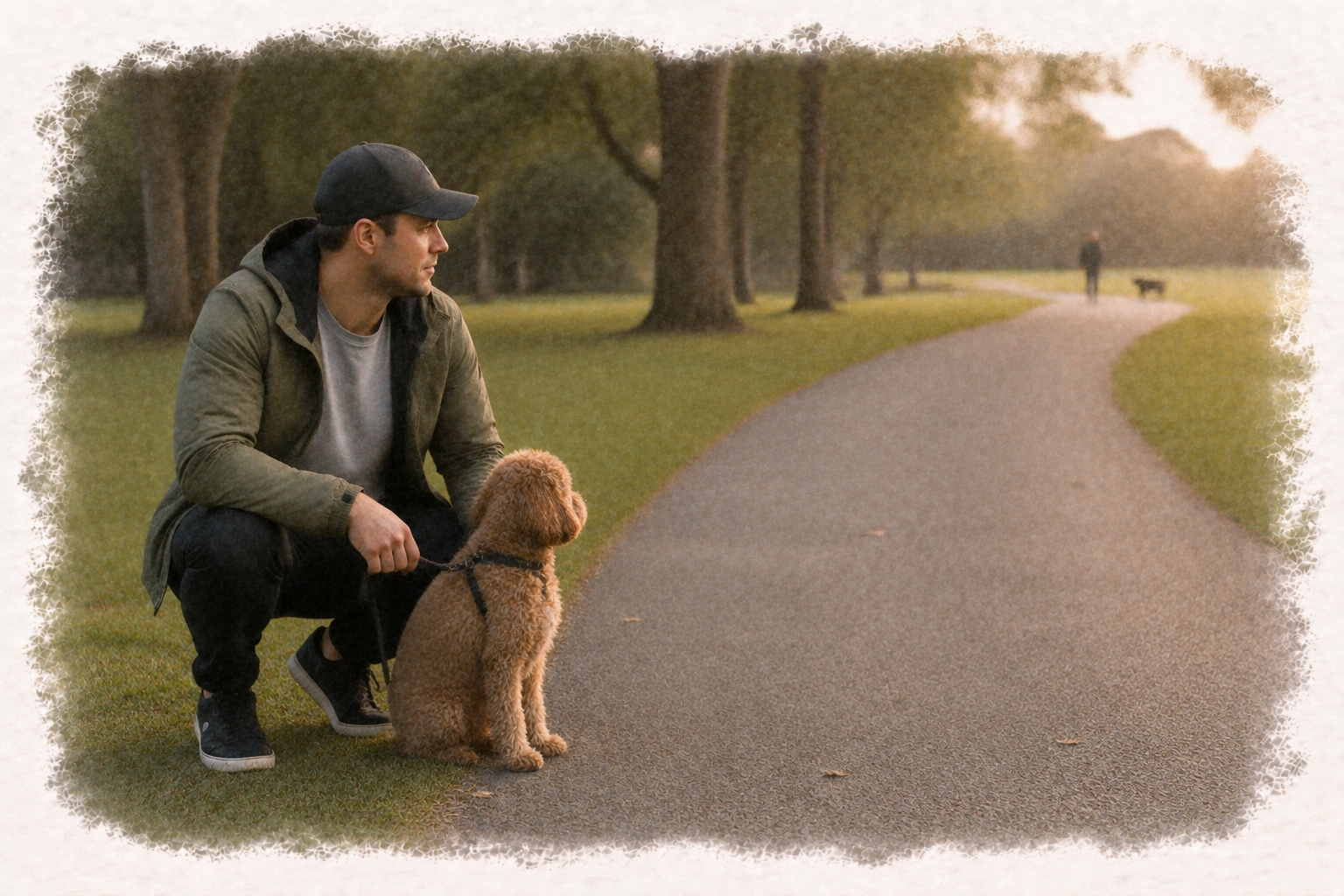
It means being near another dog without requiring anything to happen. Walking parallel to another dog and owner at a comfortable distance. Sitting in a park where dogs are present without approaching them. Standing at a distance while another dog passes, then moving on.
The dog sees the other dog. The world does not end. The encounter is neither threatening nor overwhelmingly exciting. The experience registers as: this is fine. This is normal. This is safe.
That registration, repeated across many experiences, builds the emotional memory that calm socialisation is designed to create. Not “other dogs are exciting.” Not “other dogs are scary.” But “other dogs are just part of the world, and the world is predictable.”
That is the foundation everything else is built on.
If it blossoms into something exciting, brilliant
None of this means never letting your dog play. Play is valuable. Social connection between dogs is valuable. A genuinely positive, well-matched play session is something worth having.
The point is not to avoid excitement. The point is not to aim for it before the foundation is there.
When a calm encounter naturally develops into play — when both dogs are relaxed, when the energy builds gradually, when neither is overwhelmed — that is a good social experience. Let it happen. Enjoy it.
But the owner’s job is not to manufacture that outcome. It is to create the conditions where it can happen naturally if both dogs are ready for it.
Start with calm. Start with safe. Start with boring. If it grows from there, that growth is built on something solid.
If it doesn’t, you have still given your dog something valuable. Another experience of the world being predictable and manageable. Another brick in the foundation.
That is what good socialisation actually looks like. It is not dramatic. It is not exciting to watch. But it builds dogs who are stable, confident, and genuinely comfortable in the world.
And that is worth a lot more than a highlight reel of exciting greetings.