Why Fetch Might Be Harming Your Dog
The Problem with Fetch
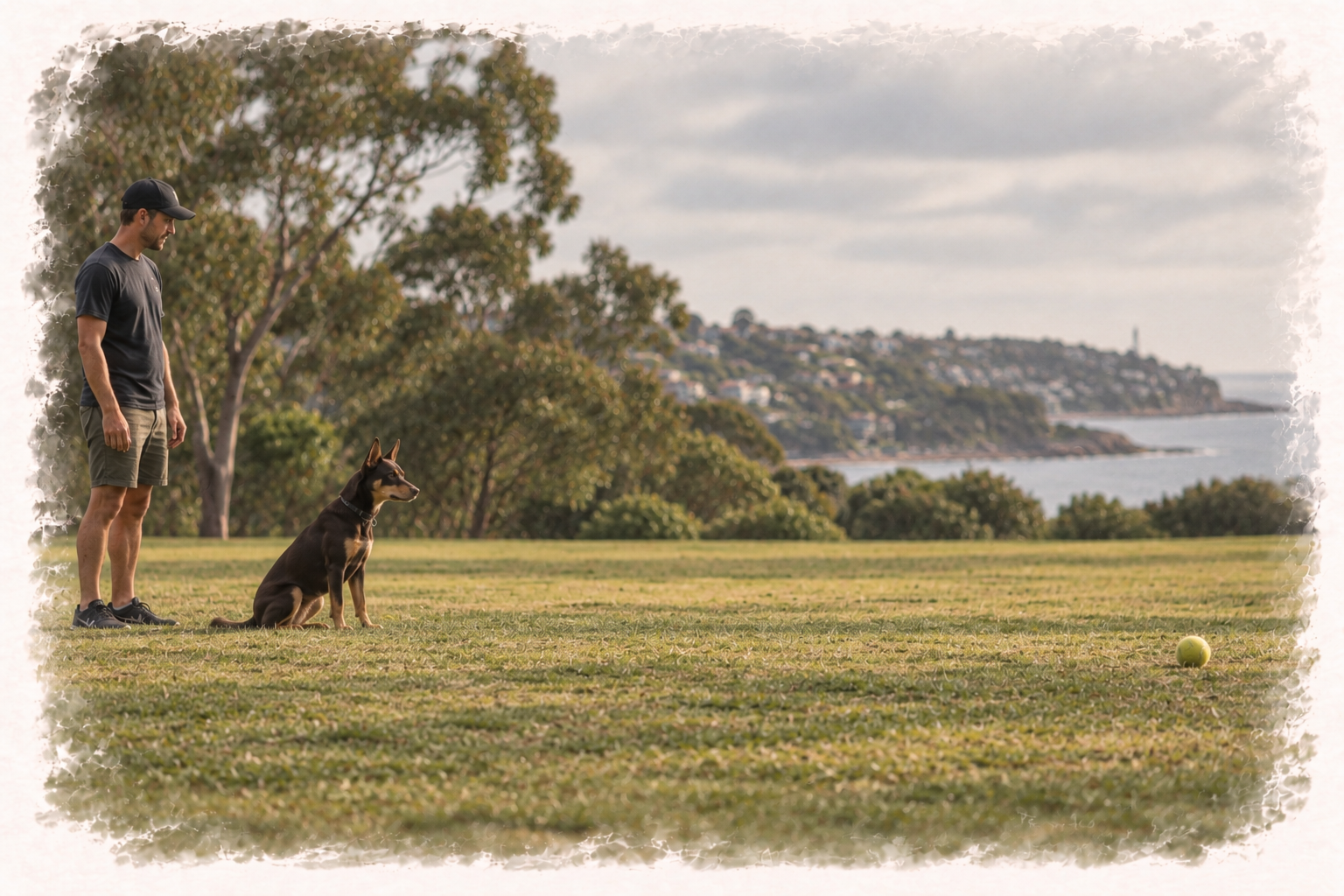
The ball goes out. The dog tears after it. They bring it back, drop it, and stare.
The owner throws it again. And again. And again.
The dog never seems to get enough. The owner keeps going because the dog keeps asking. It looks like joy. It looks like a dog living its best life.
It may be doing real harm.
What dopamine actually does
Most people think of dopamine as the pleasure chemical. That is only part of the picture.
Stanford neuroscientist Dr Andrew Huberman has spent considerable time explaining dopamine in practical terms. His core point: dopamine is not about pleasure. It is about wanting, seeking, and anticipation. It is the chemical of motivation — the thing that drives pursuit before the reward, not enjoyment after it.
Dopamine operates on two levels. The first is tonic — a baseline amount always circulating. This determines general motivation, drive, and interest in the world. The second is phasic — spikes above that baseline triggered by exciting or rewarding experiences.
These two levels are not independent. Every significant spike is followed by a trough. Dopamine does not simply return to baseline after a peak. It drops below it.
The higher and more frequent the peaks, the lower the subsequent troughs. Over time, the baseline itself drops.
Huberman uses a wave pool analogy. Normal waves rise and fall without changing the total water level. When the waves get big enough, water sloshes out. The total volume drops. The baseline falls.
When the baseline falls, everything that used to feel rewarding starts to feel less so. Reward is experienced as the height of the peak above the baseline. Narrow that gap and the experience feels diminished — even if the activity is identical.
This is the mechanism behind addiction. It is also the mechanism behind something far more common: the dog who cannot settle, who needs more and more stimulation, and whose enjoyment of ordinary life has quietly narrowed.
Dogs have the same system
Dogs have the same dopaminergic architecture as humans. The same tonic and phasic systems. The same peak-trough dynamic.
Jaak Panksepp’s affective neuroscience demonstrated that the SEEKING system — the motivational circuit powered primarily by dopamine — is conserved across all mammals. What Huberman describes in humans applies directly to dogs. The circuits are homologous. The vulnerability is identical.
A dog subjected to repeated, intense dopamine-spiking experiences will, over time, find their baseline dropping. They will require more stimulation to reach the same peak. The world between those peaks will feel increasingly flat and unsatisfying.
They will develop what looks, behaviourally, like an insatiable appetite for the activity producing the spikes.
This is not a high-energy dog. This is a dog with a depleted dopamine baseline. The two look identical from the outside. They require completely different responses.
What happens during fetch
Fetch is the most common example of this dynamic. But the principle applies to any high-intensity, repetitive, arousal-spiking activity — laser pointers, frisbee, ball launchers, relentless tug.
When a ball is thrown, the SEEKING system fires hard. Dopamine spikes sharply. The dog is in full predatory motor sequence — orient, eye, chase. The anticipation of catching the object is one of the most potent natural stimuli a dog can experience.
At the same time, adrenaline and cortisol flood the system. Heart rate spikes. The dog is in a high-intensity stress response that feels, subjectively, good. This is positive stress. Eustress. The same chemical experience as excitement before a race.
The ball is caught. The peak begins to fall.
As dopamine drops from its peak, it goes below baseline. The dog is now in a trough. This feels like deflation. Restlessness. An urgent need to do it again.
This is not the dog being greedy or badly behaved. This is the dopamine trough doing exactly what dopamine troughs do — generating a craving for another peak to escape the low.
The dog picks up the ball. Drops it at your feet. Stares. Barks. Nudges. The owner throws again.
Dopamine peaks. Falls. Trough. Craving. Repeat.
In the peak moments, the dog is having the time of their life. But the trough is real. And with each cycle, if the peaks are large and frequent enough, the baseline is being eroded.
The predatory sequence problem
Fetch does not complete the predatory motor sequence. It truncates it.
The full sequence is: orient, eye, stalk, chase, grab-bite, dissect, consume. Each phase flows from the previous. The natural resolution — the thing that brings the sequence to physiological completion — is the consume phase. The animal eats. The chase ends. Stress hormones clear. The system resets.
In fetch, the dog chases and retrieves. They do not dissect. They do not consume. The sequence is left perpetually incomplete. There is no resolution signal. The predatory system fires again and again without ever fully closing.
This is part of why fetch-obsessed dogs cannot stop. The sequence never completes, which means the motivational drive to continue it never fully extinguishes.
Compare this to a dog that spends twenty minutes following a scent trail and eventually finds food buried in grass. Orient, search, track, locate, consume. The sequence completes. Dopamine peaked during the search. The find brought resolution. The system closes. The dog settles.
Same neurological system. Completely different outcome for the nervous system.
What happens over time
Every fetch session floods the dog’s system with adrenaline and cortisol alongside the dopamine. In short bursts and appropriate contexts, this is not a problem. The stress hormones clear. The body recovers. The nervous system returns to baseline.
The problem emerges when the cycle becomes compulsive. When fetch happens daily, for extended periods, with a dog who cannot stop even when physically tired. When the dog runs through pain they cannot feel because adrenaline is blocking the signal.
In this state, adrenaline and cortisol are not clearing between sessions. They are accumulating. The chronic stress load builds. The adrenal glands — responsible for producing these hormones — are being asked to produce at a rate that exceeds their capacity to recover.
This is adrenal fatigue. It is not a metaphor. It is a physiological state in which the adrenal system has been run too hard for too long.
The signs often don’t look like tiredness. They look like increasing reactivity and irritability between play sessions. Heightened startle responses. Difficulty settling after prolonged exercise. Compulsive demand for the activity — unable to relax if the ball is in sight. Immune system changes. Digestive disruption. In some cases, increased anxiety or aggression.
There is also the dog that limps when they get home but showed no sign of pain during the game. Adrenaline is an extremely effective analgesic. The dog genuinely could not feel the developing injury during the chase. The limping begins when the adrenaline clears.
This is a well-documented phenomenon among fetch-obsessed dogs. And it is one of the clearest signs that the game has gone past the point of benefit.
The adrenaline junkie dog
The concept of the adrenaline junkie translates directly to dogs. This is not a personality type or a character flaw. It is a neurochemical state produced by a specific history of stimulation.
A dog regularly exposed to high-intensity, arousal-spiking activities since puppyhood has built a nervous system calibrated to those peaks. Their baseline dopamine may have dropped through repeated depletion. Their adrenal system has been conditioned to expect and produce at high intensity.
The result is a dog who finds normal life genuinely less stimulating than they once did. A sniff walk does not register. A puzzle feeder generates little engagement. Everything below the threshold of high-intensity pursuit feels flat.
This is not the dog’s fault. It is the predictable outcome of a nervous system shaped by its reinforcement history toward high-intensity peaks as the only stimulus worth responding to.
Huberman describes this in humans as the progressive narrowing of pleasure. The range of things that produce dopamine release gets smaller and smaller. The world narrows. The dog who once loved sniffing, exploring, playing with other dogs, and learning new things, now only lights up for the ball.
This narrowing is not a character trait. It is evidence of baseline depletion. And it is reversible — but reversal requires removing the spike, not increasing it.
The positive stress paradox
This is the part most owners resist. The dog appears to love it. They are not frightened. They are not in pain during the activity. They look ecstatic.
And yet the experience may be making them less well, not more.
The body’s stress response does not distinguish between positive and negative stressors.
Adrenaline released in excitement is chemically identical to adrenaline released in fear. Cortisol produced during an exhilarating chase is the same cortisol produced during a terrifying encounter.
The subjective experience is opposite. The physiological load is identical.
A dog spending their days in excitement-driven stress — fetch, dog parks, ball launchers, hyped-up play — is carrying the same chronic cortisol and adrenaline load as a dog spending their days in fear. The internal chemistry is the same. The consequences for the adrenal system, the immune system, the nervous system, and the baseline emotional state are the same.
The dog’s enjoyment of the activity is real. The harm is also real. Both things are true simultaneously.
The enjoyment does not cancel the harm.
What this looks like in practice
The dog described as having high energy, never getting tired, always wanting more, reactive between play sessions, difficult to settle at home, and increasingly difficult to redirect away from the ball — this is the picture.
These dogs are often exercised for two or more hours a day and are still restless at home. The owner has been told they need more exercise. They have responded by doing more. The dog has adapted to more and now needs even more. The baseline has dropped. The threshold has risen. The cycle is in progress.
The response that feels counterintuitive but is neurologically correct: reduce the intensity. Remove or dramatically limit the spike-generating activity. Allow the dopamine baseline to recover.
Fill the gap with activities that generate gentle, sustained SEEKING activation — sniff walks, scatter feeding, nosework, exploration — rather than explosive peaks.
The first week feels terrible. The dog demands the ball. They are restless. They seem worse. This is the withdrawal period — the dopamine trough that comes when a spike-producing activity is removed before the baseline has recovered. It is expected. It is temporary.
Within two to four weeks, something shifts. The scatter feed that generated no interest starts to.
The sniff walk the dog used to drag through starts to hold their attention. Lower-intensity stimulation starts to register. The world gets richer. The baseline is rebuilding.
A different way to play
This is not an argument against fetch. It is an argument about structure, frequency, and the difference between a dopamine spike and a SEEKING arc.
Fetch played with structure is neurologically different to compulsive fetch thrown until the dog collapses. The game is the same. What it does to the nervous system is not.
Here is how to structure it properly.
Start with a sit
Before any play, the dog sits. No sit, no game.
This does two things. It brings arousal down before the game begins. And it teaches the dog that calm behaviour unlocks play — not chaos, not demanding, not barking.
Place the ball on the floor
Don’t throw it yet. Step back.
This matters more than it sounds. The faster the ball moves, the higher the arousal. Starting with placement keeps the dog’s nervous system in a learnable zone. They can see the ball, understand the task, and succeed without being overwhelmed by movement.
Release with a clear cue
Say “fetch.” The dog goes and gets it.
When they return, encourage them back to you. Not demanding. Encouraging. Make yourself more interesting than staying out there with the ball.
Teach the leave it
When they return, present a treat next to their nose. Open palm. Say “leave it.” The moment the ball drops, reward. Then lure them back into a sit and reward again.
Each cycle teaches the same neural pathway. Move away. Come back to your person. Something better happens. This is the emotional architecture of recall — and the dog is building it through play.
Build slowly
As the dog gets reliable with this sequence, increase what you’re asking. Longer wait times. More engagement with the toy. Then slow rolls instead of placement. Only then do you move to throws.
Start with slow rolls. Build to full throws. Always set the dog up to win.
The key thing most people miss: the faster the ball moves, the more it feeds arousal. A dog that has been chasing balls for an hour is not settled. They are chemically agitated.
Two or three cycles of this structured game — where the dog is thinking, waiting, controlling impulse, and coming back — tires a dog in a way that actually matters. It settles the nervous system instead of spiking it.
Why this works
The structure is doing three things at once.
First, it asks the dog to think between movements. Sit. Wait. Read the release cue. Go. Come back. Make a choice about releasing the toy. Settle again. Each cycle requires the dog to shift mental states — from stillness to motion to control to stillness again. That switching is tiring. It is the kind of tired that actually settles a nervous system because it requires regulation.
Second, it builds communication. Every rep teaches the dog the same neural pathway as recall. Move away from something. Come back to your person. Something better happens. The toy becomes less important than the game. And the game is only good when you are in it together.
Third, it builds impulse control. The sit before the toy moves teaches the dog that arousal does not unlock play. Calm does. The leave it teaches the dog to disengage from something they want on cue.
A dog that can release a toy on “leave it” can step away from another dog. Can choose you over the stimulus. That is not obedience. That is capacity.
A ball thrown repeatedly asks for nothing. It rewards arousal. The dog chases harder. Returns faster. Wants it again faster. You are training the nervous system to stay elevated.
This game builds the opposite. A dog that can generate calm from within. That can wait. That can choose connection over the stimulus. That is the difference.
A few questions worth asking
Can the dog disengage voluntarily, or do they stay locked in even when tired?
Does their demand for the activity escalate over time rather than stabilise?
Are they less engaged with lower-intensity activities than they used to be?
Do they show heightened reactivity in the hours after a session?
Is the owner increasing exercise because the dog appears to need more to settle?
Any of these is a signal that the peak-trough cycle may be operating. None of them mean the game must be eliminated. They mean it needs to be restructured.
Rest is not the absence of activity
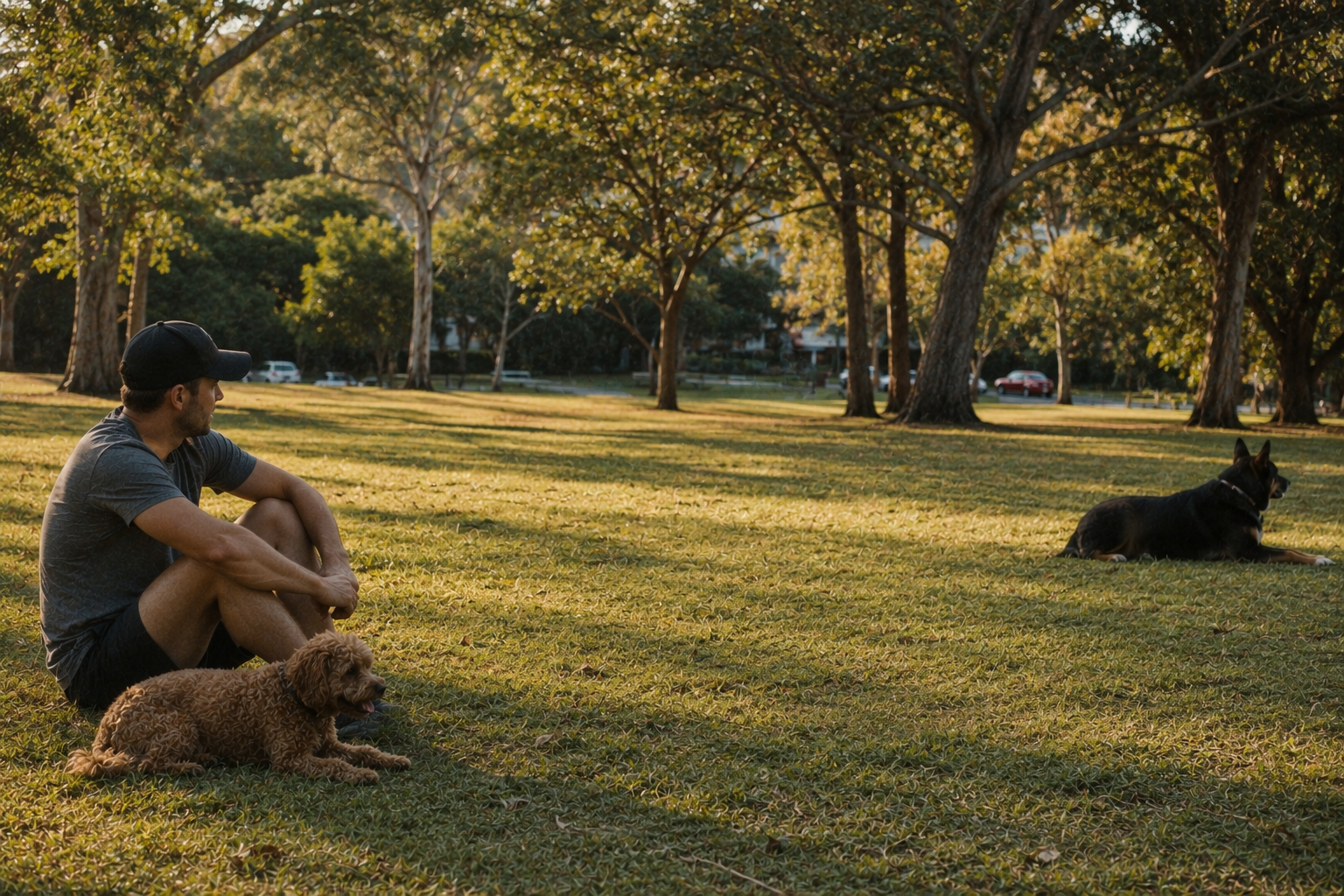
Genuine rest is not just absence of exercise. A dog lying on a sofa in a state of chronic arousal is not resting in any physiological sense. The stress hormones are still circulating. The nervous system is still activated. The baseline is still depleted.
Rest requires the parasympathetic system to actually engage. For a dog whose nervous system has been run at high intensity for months or years, that engagement does not happen automatically when the activity stops. It requires active support: slow sniff walks, calm environments, the absence of over-stimulation, and time.
This is what recovery from baseline depletion looks like. Not more exercise. Not a harder game. Slowness. Sniffing. Quiet.
The gentle, sustained SEEKING of a nose working through grass is neurologically different to the explosive chemistry of a ball launched into the air. Both activate the SEEKING system. Only one leaves the nervous system intact.
The dog that needs two hours of fetch to settle for twenty minutes needs a fundamentally different relationship with their own nervous system. Getting there requires patience, a willingness to sit with the temporary discomfort of a dog in withdrawal from their own neurochemistry, and the understanding that what looks like a dog loving their life may be a dog whose capacity for genuine pleasure has been gradually eroded by the very thing they demand.
The goal is not a tired dog. It is a settled one.
Those are not the same thing.
If any of this sounds like your dog, here's how I can help.
Through Canine Caregivers, I offer online courses and webinars to build understanding, structure, and consistency at your pace.
If you’re based in Sydney, I also offer 1:1 training across Sydney, socialisation classes, and can provide all recommended training equipment to support the work we’re doing.
I offer The Complete Care training program that covers every single base you will need as well as The Starter Program which allows you to tailor the training and support you need with flexibility.
Or get in touch for 1:1 help in Sydney
— Ian
Bondi Behaviourist
“A healthy dog is a happy dog and a happy dog is great to live with”.

Ian Shivers
Pet Parent, Dog Trainer & Behaviourist, podcast and content writer
I’m not here to help you create an obedient dog. I’m here to help you create a better life with your dog built on understanding, trust, and meeting both of your needs.
Whether you’re starting fresh with a new puppy or looking to improve life with your current dog, I’m here to guide you with practical, simple, and effective support.
Hi, my name is Ian, and I’ve been working with dogs and their owners since 2007, helping families build calmer, more connected relationships that last. With 150+ five-star Google reviews, I’m proud to be one of Sydney’s highest-rated behaviourists you can trust.


Table of Content
Get Your Free Starter Guide
Trusted by over 4,000 puppy owners, rescue dog owners and owners of dogs with behaviour issues across Sydney.

Ebook - The complete dog training framework
Webinar - A deep dive into the dog training framework
Dog Training Blog
Discounts on Lyka Pet Food
Recent Posts